 ultimate-guide
Hiring One Contractor for Indoor and Outdoor Projects
Table of Contents
- General Contractor vs. Specialty Contractor: Which Approach Works Best
- How to Vet a General Contractor for Combined Indoor and Outdoor Work
- Managing Home Improvement Budgets Across Multiple Project Phases
- Coordination and Timeline Management When Hiring One Contractor
- Frequently Asked Questions
Last Updated: August 29, 2026
Hiring one contractor for both indoor and outdoor projects gives you a single point of accountability, unified scheduling, and fewer coordination headaches. The key is vetting that contractor's ability to manage competing timelines without sacrificing quality on either side.
General Contractor vs. Specialty Contractor: Which Approach Works Best
A general contractor is a licensed professional who oversees all aspects of a construction project, including both interior and exterior work, and coordinates subcontractors as needed. A specialty contractor focuses on one trade and typically cannot legally manage an entire project.
Hiring one general contractor means one point of contact, unified scheduling, and someone accountable if timelines slip or quality falters. Hiring multiple specialty contractors shifts project management to you, you're coordinating schedules, managing payments, and bearing the risk if one contractor's delay cascades into another's inefficiency. A contractor pulling permits, scheduling inspections, and managing subcontractor conflicts is worth the premium you'll pay for unified management.
How to Vet a General Contractor for Combined Indoor and Outdoor Work
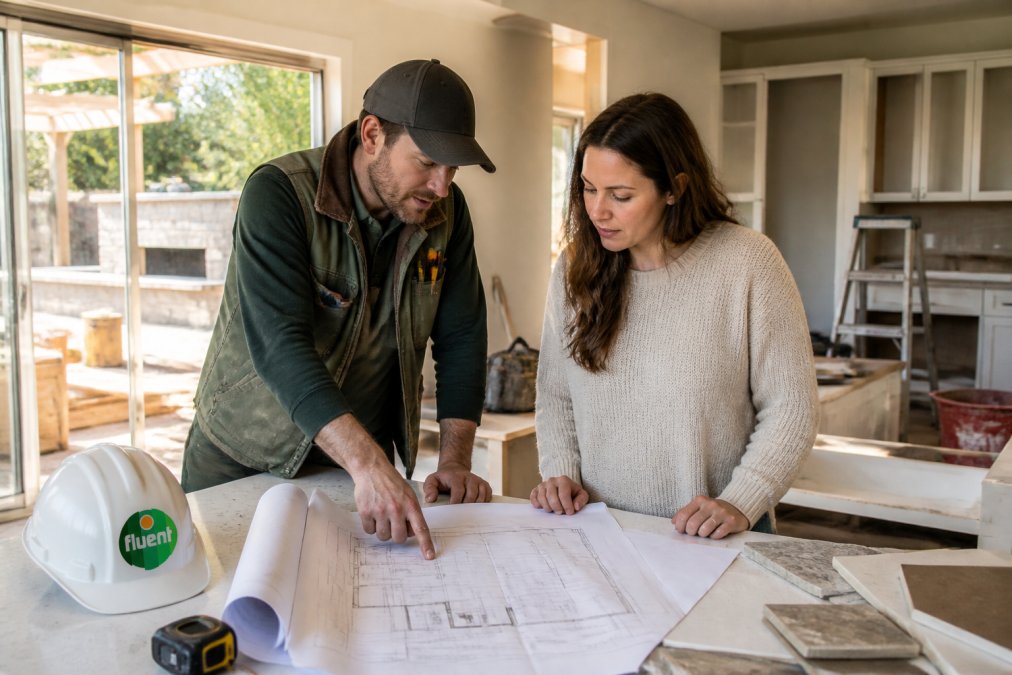
Start by verifying licensing and insurance. Ask specifically about their experience with combined projects: "How many times have you managed a kitchen renovation and outdoor hardscaping simultaneously?" This reveals whether they've actually juggled competing timelines.
Request references from projects completed in the last two years and call them to ask about timeline adherence, communication frequency, and how the contractor handled unexpected issues. Review their portfolio for quality consistency in finish work, trim, and paint lines, inconsistent quality suggests poor supervision under time pressure.
Interview at least three contractors. Observe how they ask questions about your timeline constraints and budget ceiling. A contractor who jumps straight to pricing without understanding your priorities will likely miss critical details during execution. Pay attention to how they explain their process for managing interior and exterior crews to avoid conflicts, and whether they mention permitting timelines and material lead times.
Managing Home Improvement Budgets Across Multiple Project Phases
Separate your budget into phases: permits and site prep, interior construction and exterior framework, and finishes and hardscaping details. This forces explicit conversations about when money gets spent.
Establish a change order process before work begins. When unexpected issues arise, a clear process prevents scope creep and surprise costs. Build a contingency reserve of 10-15% of your total budget as protection when unexpected issues arise.
Request a detailed payment schedule tied to milestones, not calendar dates: "Pay 25% at permit approval, 25% at framing inspection, 25% at drywall completion, 25% at final inspection." Milestone-based payment ensures the contractor stays motivated to hit actual progress markers. Ask how the contractor will track costs across both projects using project management software or detailed spreadsheets.
Coordination and Timeline Management When Hiring One Contractor
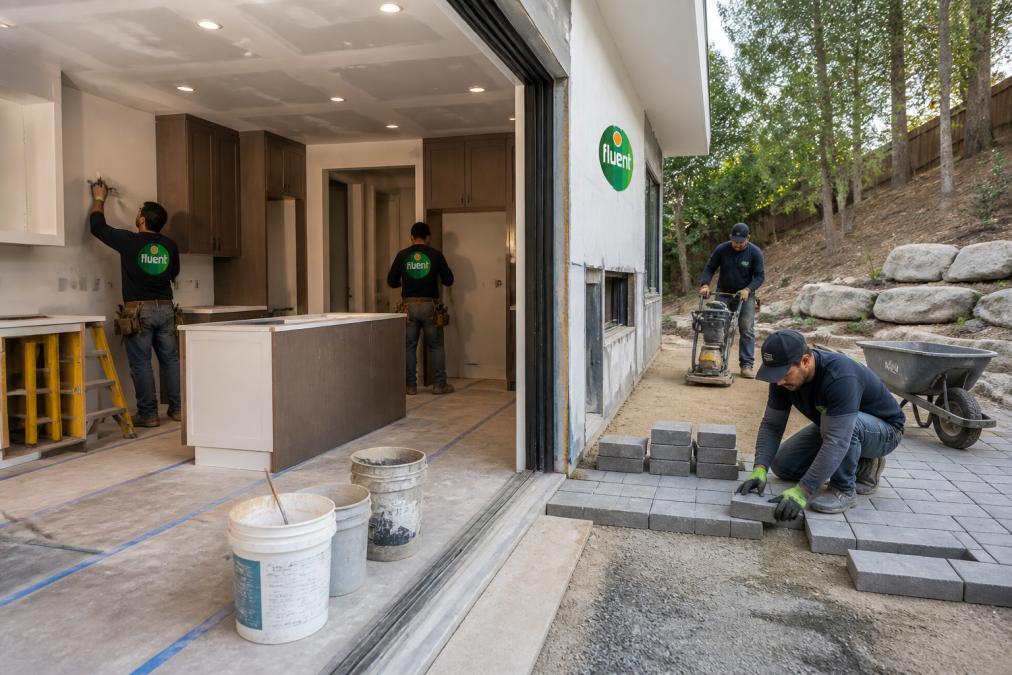
The biggest risk when hiring one contractor for indoor and outdoor projects is that one work area becomes a bottleneck. Ask upfront how they'll prevent this. A solid answer includes separate crews for interior and exterior work, staggered start dates, and a master schedule identifying critical dependencies.
Request a detailed week-by-week timeline before work starts, not a vague "8-12 weeks" estimate. This timeline should account for inspection wait times, often 1-2 weeks, which many contractors gloss over.
Weekly check-ins catch problems before they cascade. Establish clear communication channels: Who do you call if there's a problem? How quickly will they respond? Document decisions in writing to prevent misunderstandings later.
Hiring one contractor for indoor and outdoor projects requires upfront diligence that pays dividends throughout execution. The right contractor brings unified project management, coordinated scheduling, and accountability across both spaces. Fluent Contracting brings over 20 years of experience managing exactly these combined projects, with flexible financing options that let you start immediately rather than waiting to save. Get started with a consultation and see how coordinated project management transforms your renovation timeline and final results.
Frequently Asked Questions
What are the main red flags when hiring a contractor for indoor and outdoor work?
Watch for contractors who lack references for both project types, cannot provide proof of current licensing and insurance, or give vague timelines without written schedules. Avoid anyone who pressures you to pay the full amount upfront or refuses to provide a detailed scope of work. A contractor who cannot clearly explain how they'll coordinate subcontractors for specialized trades is also a warning sign that project management may suffer.
Is it more cost-effective to hire one general contractor or separate specialists?
Hiring one general contractor for both indoor and outdoor projects often reduces overhead costs and simplifies coordination, but pricing depends on the contractor's expertise and local market rates. A single contractor manages subcontractor relationships and timelines, potentially avoiding delays and communication breakdowns. However, specialized contractors may excel in their specific trades. Request detailed bids from both approaches to compare true costs for your project scope.
How can you verify a contractor's expertise in both indoor and outdoor work?
Ask for a portfolio of completed projects showing both renovation work and hardscaping or outdoor installations. Request references from homeowners who hired them for similar combined projects. Verify their licensing covers both construction and any specialized outdoor work like hardscaping. Ask specific questions about their subcontractor relationships and how they've managed timelines when coordinating indoor and outdoor phases simultaneously.
This article was written using GrandRanker