
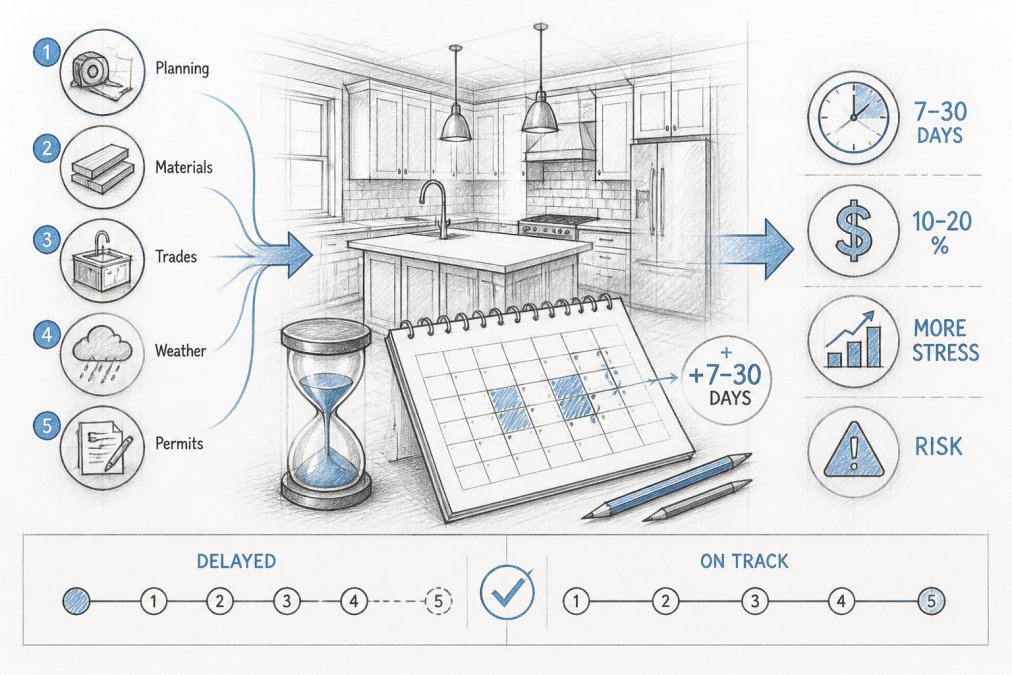
 how-to
How to Avoid Kitchen Renovation Delays
Table of Contents
- Start With a Realistic Kitchen Remodel Timeline
- Plan Material Procurement and Kitchen Renovation Lead Times
- Handle Permits and Inspections Before Work Begins
- Common Kitchen Renovation Mistakes That Derail Schedules
- How to Manage a General Contractor for On-Time Delivery
- Build in Budget Buffer and Change Order Controls
- Coordinate Subcontractors and Trade Schedules
- Conclusion
- Frequently Asked Questions
Last Updated: August 30, 2026
The single biggest reason kitchen renovations slip past their deadlines is poor planning before the first nail gets hammered. Most homeowners start with a contractor's timeline estimate and hope for the best. What actually prevents delays is a deliberate system: realistic scheduling, material procurement locked in early, permits handled before work starts, and clear communication channels built into your project from day one.
This guide from Fluent Contracting breaks down how to avoid kitchen renovation delays through proven project management practices. The difference between a kitchen remodel that finishes on time and one that stretches into months of chaos comes down to decisions you make before construction even begins.
Start With a Realistic Kitchen Remodel Timeline
A realistic kitchen renovation timeline accounts for the actual duration of each phase, not the optimistic version contractors mention in initial conversations. Most homeowners hear "8 to 12 weeks" and assume that's the total time from start to finish. In reality, that estimate often excludes permitting, material lead times, and inspection delays.
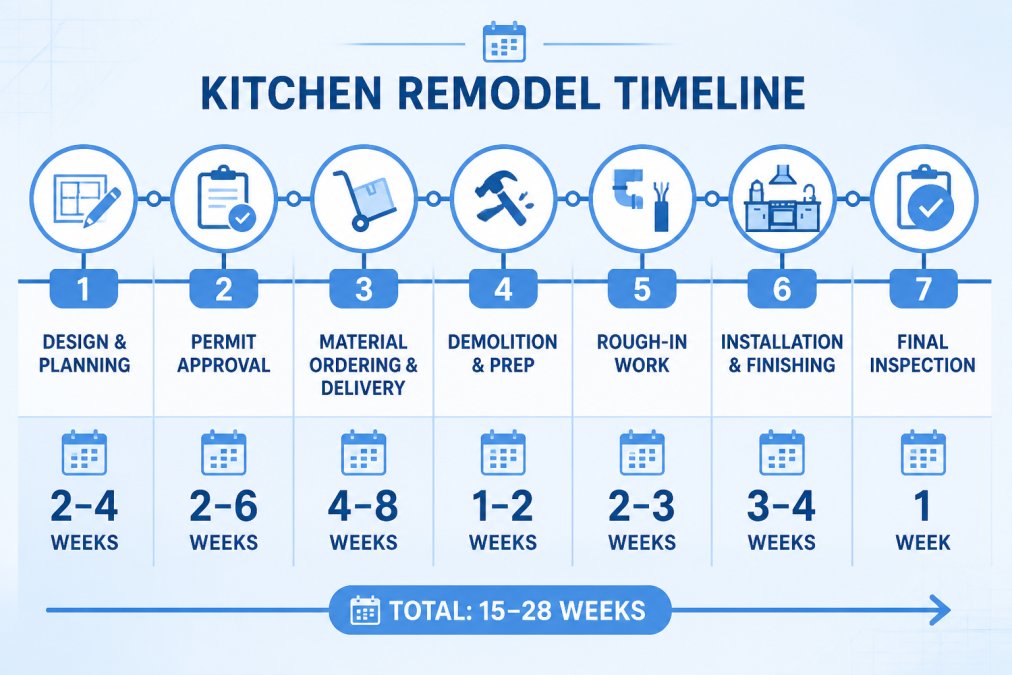
A typical kitchen remodel timeline breaks into distinct phases: design and planning (2-4 weeks), permit approval (2-6 weeks), material procurement and delivery (4-8 weeks), demolition and site preparation (1-2 weeks), construction work including rough-in, cabinet installation, and finishing (3-4 weeks), and final inspections (1-2 weeks).
Adding these phases realistically puts most kitchen renovations at 14 to 20 weeks, not the 8 to 12 weeks initially quoted. Building in a contingency buffer of 2 to 4 weeks for unexpected structural issues or permit delays brings the realistic total to 16 to 24 weeks, 4 to 6 months from design approval to final walk-through.
The mistake most homeowners make is treating the contractor's estimate as a hard deadline rather than a starting point. Ask explicitly about each phase and add realistic padding. Fluent Contracting includes realistic timelines in every estimate because we've seen how projects compress when homeowners don't account for permitting and material lead times.
Plan Material Procurement and Kitchen Renovation Lead Times
Material lead times are the single most common cause of kitchen renovation delays. Custom cabinetry, countertops, and specialty appliances don't ship in days, they ship in weeks or months. If you finalize material selections after construction starts, you've already lost weeks of lead time.
Lock in material selections and place orders before demolition begins. Standard cabinetry ships in 2-4 weeks, semi-custom in 6-10 weeks, and fully custom in 12-16 weeks. Countertops require 3-6 weeks for fabrication after templating. Specialty appliances often have lead times of 8-12 weeks.
Create a material procurement timeline working backward from your target finish date. If your remodel is scheduled for 20 weeks and custom cabinetry takes 14 weeks, place that order by week 6. Finalize cabinet design by week 4-5, schedule countertop templating by week 8, and lock in appliance selections by week 3.
Many homeowners delay material selections while deciding between options. That indecision directly extends your timeline. The earlier you commit to selections, the earlier materials start their lead time clock. Fluent Contracting works with clients to finalize material specs early because kitchen renovation lead times are non-negotiable.
Document all material orders with delivery dates and confirm them in writing with suppliers. Build in a 1-week buffer before your scheduled installation date so late deliveries don't halt the project. If a material doesn't arrive on schedule, your contractor needs to know immediately.
Handle Permits and Inspections Before Work Begins
Permitting and inspections are the most unpredictable variables in kitchen renovation delays. The best defense is to submit permit applications as soon as your design is finalized, not after you've signed the contractor agreement.
Most kitchen renovations require building permits because they involve structural changes, electrical work, and plumbing modifications. Permit applications require detailed plans showing layout, electrical and plumbing routes, and structural details. Submit applications immediately after design approval.
Typical permit approval timelines range from 2 to 6 weeks depending on your local building department. Some jurisdictions have online portals that speed up the process; others require in-person submissions and multiple rounds of revisions. Respond quickly to any requests to keep approval moving forward.
Once permits are issued, inspections happen at key phases: rough-in inspection after electrical and plumbing are installed, and final inspection after all work is complete. Request inspection appointments well in advance and have your contractor coordinate directly with the building department.
Common inspection delays occur when work doesn't meet code requirements and needs correction before approval. Hiring a contractor experienced with local building codes prevents this. They know what your jurisdiction requires and build it into their work from the start.
Fluent Contracting manages the entire permitting and inspection process. We submit applications early, respond to department requests promptly, and coordinate inspections to keep delays from happening at the permitting stage.
Common Kitchen Renovation Mistakes That Derail Schedules
Understanding what typically goes wrong helps you avoid the same pitfalls. The most common mistakes are scope creep, poor contractor communication, underestimating structural issues, and inadequate contingency planning.
Scope creep happens when homeowners add features or changes after construction starts. Each change requires the contractor to adjust the work sequence, potentially order new materials, and reschedule trades. What seems like a small addition can add weeks to your timeline. Avoid this by finalizing your scope completely before work begins and documenting every detail in your contract.
Poor communication between you and your contractor creates delays because issues aren't caught early. Weekly check-in meetings where you review progress, discuss problems, and approve changes keep everyone aligned.
Structural surprises, hidden water damage, outdated wiring, or unexpected load-bearing walls, can add weeks to a remodel. These are discovered only after demolition starts. A pre-demolition inspection by an experienced contractor can identify potential issues and budget time for them. Fluent Contracting performs detailed on-site inspections before quoting any kitchen renovation to catch these issues upfront.
Inadequate contingency buffers mean that any delay compounds into a missed deadline. Building a 2 to 4-week contingency buffer into your overall timeline gives you breathing room for inevitable unexpected issues.
How to Manage a General Contractor for On-Time Delivery
Your contractor is responsible for executing the work on schedule, but you need to actively manage that relationship to ensure accountability. This means establishing clear communication protocols, tracking progress against the timeline, and documenting any changes or delays.
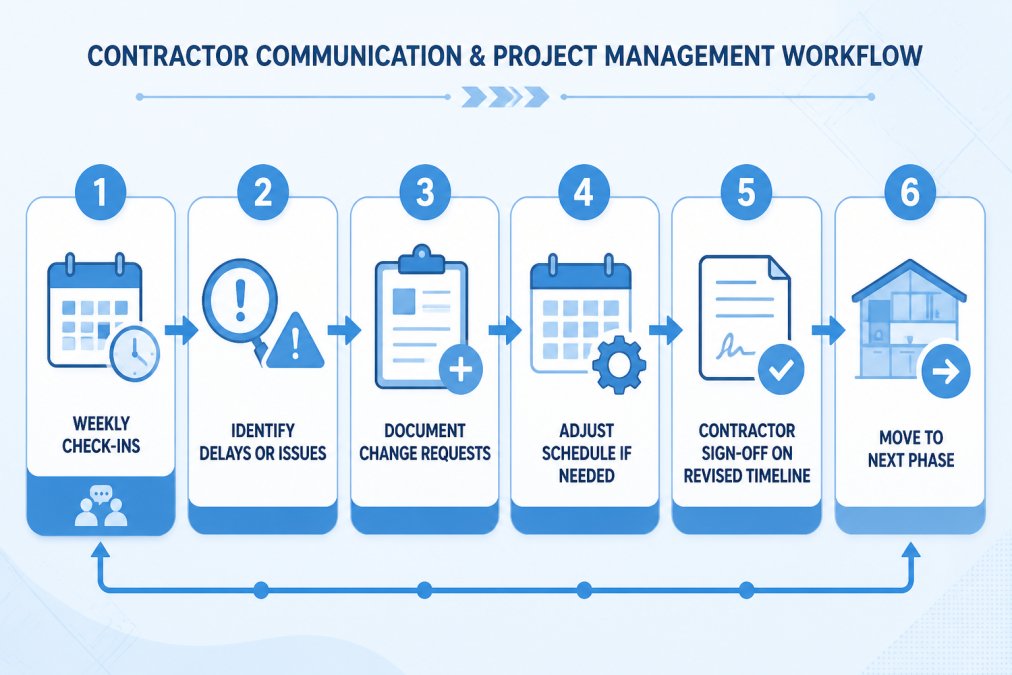
Start by establishing a detailed project schedule with your contractor before work begins. This schedule should break down each phase into specific tasks, assign responsible parties, and set completion dates. Your contractor should provide weekly updates showing what was completed, what's scheduled for the coming week, and any issues or delays.
Weekly check-in meetings are essential. Spend 30 minutes reviewing progress, discussing problems, and approving decisions that affect the timeline. If materials are delayed, you learn about it immediately and can adjust the work sequence. If an inspection is scheduled, you coordinate access to your home.
Document everything in writing. When your contractor proposes a change or delay, get it in writing with the timeline impact. This creates a clear record of what was agreed to and prevents misunderstandings later.
Hold your contractor accountable to the schedule. If they're running behind, ask why and what they're doing to catch up. A good contractor will adjust the work sequence, add labor, or reschedule trades to stay on track.
Fluent Contracting manages kitchen renovation schedules with weekly communication and detailed project tracking. We provide regular updates, coordinate all trades and inspections, and proactively manage delays before they impact your overall timeline.
Build in Budget Buffer and Change Order Controls
Budget buffers and change order controls directly prevent kitchen renovation delays because they eliminate the financial friction that often causes projects to stall. When unexpected issues arise and you don't have budget to address them, the project stops while you figure out how to pay for corrections.
Establish a contingency budget before work begins. This fund covers unexpected structural issues, material price increases, or design changes you decide to make during construction.
Implement a formal change order process. Any change to the scope, materials, or timeline must be documented in a change order signed by you and your contractor before work proceeds. This prevents scope creep and ensures you understand the cost and schedule impact of every decision.
Review change orders carefully before signing. Ask your contractor how the change affects the project schedule and budget. Some changes can be absorbed into the existing timeline; others require extending the project.
Communicate your contingency budget limits clearly to your contractor. Let them know you have a specific amount set aside for unexpected issues and that any costs beyond that require your approval before proceeding.
Fluent Contracting provides transparent change order documentation and clearly explains how any changes impact your timeline and budget.
Coordinate Subcontractors and Trade Schedules
Kitchen renovations involve multiple trades: electricians, plumbers, HVAC technicians, cabinet installers, countertop fabricators, and finish carpenters. Coordinating these trades so they work in the right sequence without delays requires detailed planning and active management.
Your general contractor is responsible for scheduling trades in the correct order. Rough-in work happens first, followed by cabinet installation, countertop fitting, and finishing work. If trades arrive out of sequence or overlap in conflicting ways, the project stalls.
Create a detailed subcontractor schedule showing when each trade is scheduled to work. Share this schedule with all trades at least one week in advance. Confirm appointments 48 hours before each trade arrives.
Establish a backup plan if a subcontractor cancels or is delayed. Your contractor should have relationships with multiple trades so they can bring in alternatives if someone doesn't show up.
Document any delays caused by subcontractors. If a plumber doesn't finish rough-in work on schedule and holds up the cabinet installer, that delay needs to be documented and communicated to you.
Fluent Contracting maintains relationships with reliable subcontractors and coordinates all trade schedules to keep kitchen renovation projects moving forward.
Conclusion
Avoiding kitchen renovation delays comes down to planning before work starts, communicating clearly throughout the project, and building flexibility into your timeline and budget. Lock in material selections and place orders early, submit permits immediately, establish a realistic timeline with contingency buffers, and manage your contractor with weekly check-ins and documented change orders.
Fluent Contracting handles all of these elements for you. We manage material procurement and lead times, coordinate permitting and inspections, schedule subcontractors efficiently, and keep your kitchen renovation on track with transparent communication and detailed project management. Get started with Fluent Contracting and transform your kitchen on schedule.
Frequently Asked Questions
What are the most common causes of kitchen renovation delays?
The top causes include permit approval bottlenecks, unexpected structural issues discovered during demolition, material lead times longer than anticipated, subcontractor scheduling conflicts, and scope creep from change orders. Weather, labor shortages, and supply chain disruptions also impact timelines. Planning for these variables upfront—including a contingency buffer—prevents most delays from derailing your project completion date.
How long does a typical kitchen remodel timeline take?
A standard kitchen renovation typically runs 6 to 12 weeks from start to finish, depending on scope and complexity. This includes 2-4 weeks for permits, 1-2 weeks for material procurement, 2-3 weeks for demolition and rough-in work, and 2-4 weeks for installation and finishing. Custom cabinetry, structural changes, or building code upgrades add time. A realistic kitchen remodel timeline accounts for these phases and builds in a 10-15% contingency buffer for unexpected issues.
What common kitchen renovation mistakes cause delays?
Frequent mistakes include underestimating material lead times, failing to obtain permits before work starts, making design decisions mid-project, not coordinating subcontractor schedules in advance, and ignoring structural problems until demolition reveals them. Scope creep from change orders also derails timelines. Avoiding these common kitchen renovation mistakes requires upfront planning, clear contractor communication, and documented decisions before the first nail is driven.
How can I ensure my contractor stays on schedule?
Establish clear expectations in writing: project milestones, weekly check-ins, and documented change order procedures. Track progress against the agreed kitchen remodel timeline with regular on-site inspections. Require your contractor to provide a detailed schedule showing subcontractor sequencing and material delivery dates. Address delays immediately in writing. A strong contractual obligation that defines penalties for missed deadlines and a contractor with a track record of on-time delivery are your best protections.
This article was written using GrandRanker