
 ultimate-guide
How to Choose a General Contractor: 2026 Guide
Table of Contents
- Start With Scope: Define Your Project Before Contacting a General Contractor
- How to Verify Contractor License, Insurance, and Bonding
- General Contractor Interview Questions That Reveal the Truth
- Red Flags When Hiring a Contractor You Should Never Ignore
- Contractor Payment Schedule Best Practices for Homeowners
- What a Solid General Contractor Contract Must Include
- Managing the Project After You Sign: Tools, Walkthroughs, and Punch Lists
- Conclusion
Last Updated: August 22, 2026
Start With Scope: Define Your Project Before Contacting a General Contractor
Knowing how to choose a general contractor starts long before you make a single phone call. The biggest mistake homeowners make is reaching out to contractors before they can clearly describe what they want built, renovated, or replaced. Contractors price and schedule based on scope. Walk into that conversation without one, and you'll get wildly inconsistent bids that are impossible to compare.
Homeowners who come prepared get better bids, faster timelines, and fewer surprises.
Before contacting anyone, define your project across four dimensions:
- What: Kitchen remodel, bathroom renovation, home addition, outdoor living space, or new construction
- Where: Which rooms or areas are affected, and whether structural changes are involved
- When: Your preferred start date and any hard deadlines
- Budget range: Even a rough figure helps a contractor assess whether the project is viable
You don't need architectural drawings at this stage. A clear written description, rough dimensions, and a few reference photos are enough to get meaningful estimates. If your project spans multiple areas, such as an indoor kitchen renovation combined with a patio installation, note that upfront. A contractor who handles both trades eliminates the coordination risk that comes with managing two separate crews.
One more thing: pull your local zoning records before the first meeting. Knowing whether your project requires a building permit, setback variances, or HOA approval saves time and prevents scope surprises mid-project.
| Project Element | Why It Matters Before Hiring |
|---|---|
| Written description | Enables apples-to-apples bid comparison |
| Rough dimensions | Helps contractor estimate materials and labor |
| Reference photos | Aligns expectations on finishes and style |
| Budget range | Filters out contractors who can't deliver at your scale |
| Permit requirements | Prevents scope changes and delays after signing |
How to Verify Contractor License, Insurance, and Bonding
Verifying credentials is not optional. A general contractor working without proper licensing or insurance puts your home, your finances, and your legal standing at risk. This is the step most homeowners skip because it feels bureaucratic. It isn't.
Checking Licenses Through State Licensing Boards
Every state maintains a licensing board for contractors, and most publish searchable databases online. According to the National Association of State Contractors Licensing Agencies, licensing requirements vary significantly by state, so always verify through your specific state's authority rather than relying on a contractor's word.
Search the database using the contractor's full legal business name and license number. Confirm that the license is active, covers the type of work you're hiring for, and hasn't been subject to disciplinary action. A license in "general contracting" doesn't always cover specialty trades like electrical or plumbing, which may require separate subcontractor licenses.
Confirming Liability Insurance and Workers' Compensation Coverage
Ask for a Certificate of Insurance before signing anything. The certificate should show:
- General liability insurance: Covers property damage or injuries that occur on your job site
- Workers' compensation coverage: Protects you from liability if a worker is injured during your project
Call the insurance carrier directly to verify the policy is current. Certificates can be backdated or altered. This takes five minutes and eliminates enormous financial exposure.
Bonding is separate from insurance. A surety bond protects you if the contractor abandons the project or fails to pay subcontractors. As the Federal Trade Commission's guidance on hiring home improvement contractors notes, unverified contractors represent one of the most common sources of consumer complaints in the home improvement sector.
General Contractor Interview Questions That Reveal the Truth
Most homeowners ask the wrong questions. They focus on price and timeline, which any contractor can answer convincingly. The questions that actually reveal competence and reliability are the ones most guides never mention.

Interview at least three contractors for any significant renovation or construction project. The comparison itself is valuable, you'll quickly notice who gives vague answers versus who walks you through specifics.
Questions About Subcontractors and Building Permits
A general contractor's job is to manage the project, which means coordinating subcontractors for electrical, plumbing, HVAC, tile, and other specialty work. Ask these directly:
- "Which trades will you subcontract, and can I meet those subcontractors?"
- "How long have you worked with your primary subcontractors?"
- "Who pulls the building permits, you or the subs?"
- "What happens if a subcontractor misses a scheduled day?"
The permit question is particularly revealing. A contractor who suggests you pull your own permits to "save money" is a red flag. Licensed general contractors pull their own permits. That's how they take legal responsibility for code compliance and workmanship.
Assessing Communication Style and Personality Fit
This part of the vetting process gets ignored because it feels subjective. It isn't. Poor communication is the root cause of most renovation disputes.
Ask: "How will you communicate project updates, daily texts, weekly site meetings, a project management app?" A contractor who can't describe their communication process clearly will not communicate well once work starts.
Personality fit matters, too. You're inviting this person and their crew into your home for weeks or months. A contractor who dismisses your questions, talks over you, or makes you feel uninformed during the interview will not improve once the contract is signed.
Red Flags When Hiring a Contractor You Should Never Ignore
Some warning signs are obvious. Others are easy to rationalize when you're excited about a project. Here are the ones that should stop the conversation entirely.
Demands a large upfront deposit. Legitimate general contractors don't require more than 10-15% upfront on most residential projects. A demand for 50% or more before work begins is a strong indicator of financial instability or intent to walk.
No written estimate. Any contractor who provides only a verbal quote is not a contractor you want managing your project. Everything must be in writing, including materials, labor, timeline, and payment milestones.
Unusually low bid. A bid that's significantly lower than the others isn't a deal. It's a signal that the contractor has underestimated the scope, plans to use inferior materials, or will add costs through change orders once work begins.
Pressure to decide immediately. Reputable contractors have pipelines. They don't need your signature today. High-pressure tactics are a manipulation tool, not a scheduling constraint.
No verifiable references or portfolio. A contractor who can't provide references from recent, similar projects has no track record you can verify. As the Consumer Financial Protection Bureau's homeowner resources advises, always verify references before signing any home improvement contract.
Unlicensed or uninsured. Already covered above, but worth repeating: no license verification, no contract.
Contractor Payment Schedule Best Practices for Homeowners
Contractor payment schedule structure is one of the most important protections you have as a homeowner. Payment releases should be tied to project milestones, not calendar dates.
A standard residential payment schedule follows this general structure:
- Initial deposit (10-15%): Paid at contract signing to secure materials and schedule
- Milestone payment 1 (25-30%): Released after rough framing, demolition, or foundation work is complete
- Milestone payment 2 (25-30%): Released after rough mechanical work (electrical, plumbing, HVAC) passes inspection
- Milestone payment 3 (20-25%): Released after drywall, flooring, and major finish work is complete
- Final payment (10-15%): Released only after the final walkthrough and punch list are resolved
Never pay ahead of completed work. If a contractor requests payment before a milestone is reached, ask why. Legitimate reasons exist, specialty material orders sometimes require deposits, but those should be itemized in the contract, not requested verbally mid-project.
Retain the final payment until you've done a thorough walkthrough and confirmed every item on the punch list is resolved. That final check is your primary use for getting the last details done correctly.
What a Solid General Contractor Contract Must Include
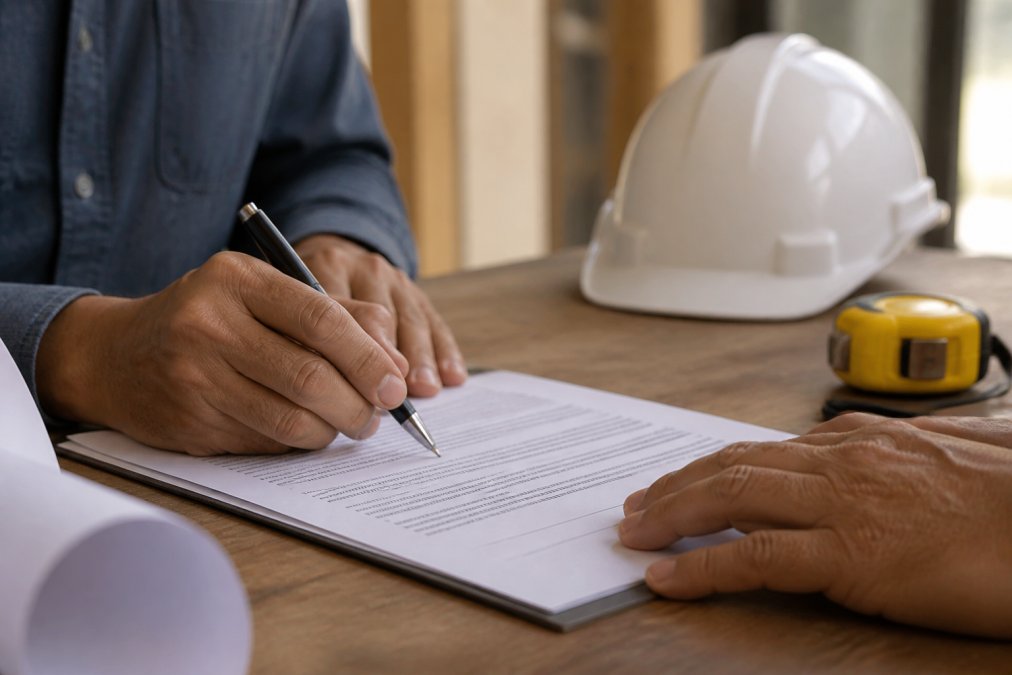
A general contractor contract is a legal document, and it should be treated as one. Read it in full before signing. If something is vague, ask for clarification in writing. If something is missing, require it to be added.
Scope of Work, Change Orders, and Lien Waivers
The scope of work section is the most critical part of the contract. It should describe, in specific detail, every task to be performed, every material to be used (with brand, model, or grade specified where relevant), and every area of the home affected.
Change orders are written amendments to the original scope. Any change to the project, whether requested by you or necessitated by unforeseen conditions, must be documented as a change order before work proceeds. Verbal agreements about changes are unenforceable and lead to disputes.
Lien waivers protect you from subcontractor claims against your property. If your general contractor fails to pay their subs, those subcontractors have the legal right to place a mechanic's lien on your home. Require conditional lien waivers from all subcontractors at each payment milestone.
Dispute Resolution Protocols and Warranty Expectations
Most homeowners never read the dispute resolution clause until they need it. By then, it's too late to negotiate.
A solid contract should specify:
- Whether disputes go to mediation, arbitration, or litigation
- Which state's law governs the contract
- The timeframe for raising a dispute after project completion
Warranty terms are equally important and frequently absent from contractor agreements. Ask specifically: "What is your workmanship warranty, and what does it cover?" Many states have implied warranty protections for residential construction under applicable building codes, but a written warranty from your contractor is a stronger and more direct protection. Confirm whether the warranty covers both materials and labor, and for how long.
Fluent Contracting's commitment to meticulous, thorough project execution means every detail of the scope is documented before work begins, because a clear contract protects everyone involved.
Managing the Project After You Sign: Tools, Walkthroughs, and Punch Lists
Signing the contract is the beginning, not the finish line. Active project management on your part significantly reduces the likelihood of costly mistakes or miscommunication.
Use digital project management tools. Many general contractors now use platforms that allow homeowners to track progress, approve change orders, and communicate in a centralized log. If your contractor doesn't use one, ask whether they're open to sharing a shared project folder or weekly status email. A written communication trail is invaluable if a dispute arises later.
Schedule regular site inspections. Don't wait until the project is complete to assess quality. Visit the site at key milestones, after framing, after rough mechanicals, after drywall, and document what you see with photos. This is your opportunity to catch issues before they're buried behind walls or flooring.
Understand the punch list process. A punch list is a formal document compiled during the final walkthrough that lists every incomplete or unsatisfactory item requiring correction before final payment is released. Walk the entire project with your contractor and document each item in writing. Set a clear deadline for completion.
One thing most renovation guides miss: ask about post-completion support before you sign. What happens if a tile cracks six months later? If a door doesn't hang correctly after the first winter? Knowing the answer upfront, and having it in the contract, is what separates a professional contractor from someone who disappears after the final check clears.
The best general contractors treat the final walkthrough as a quality checkpoint, not a formality. If yours rushes it, that tells you something important about how they've been managing the entire project.
Choosing the right general contractor is one of the highest-stakes decisions a homeowner makes. The process requires verifying credentials, comparing written bids, evaluating communication, and understanding every line of the contract before you sign. Fluent Contracting brings over 20 years of construction and hardscaping experience to every project, with a track record of meticulous work, on-time completion, and transparent project terms. Flexible financing options mean you can start your renovation without waiting months to save up. Get started with Fluent Contracting and move your project from planning to completion with a team that takes every detail seriously.
Frequently Asked Questions
How many bids should I get before choosing a general contractor?
Get at least three written bids before making a decision. Three quotes give you enough data to spot an outlier, whether suspiciously low or unusually high, without overwhelming you with options. Compare each bid line by line against the same scope of work. A significant price gap usually signals different material grades, excluded tasks, or a contractor cutting corners on labor. Never award a project based on the lowest number alone; weigh workmanship reputation and communication quality alongside cost.
How do I verify a general contractor's license and insurance?
Check the contractor's license through your state's contractor licensing board website, most states offer a free public lookup by name or license number. Confirm the license is active, covers the correct trade classification, and shows no disciplinary actions. For insurance, ask the contractor to provide a certificate of insurance naming you as an additional insured. Call the insurance carrier directly to confirm the policy is current and that both general liability and workers' compensation coverage are in force for your project's duration.
What are the biggest red flags when hiring a general contractor?
The most serious red flags include demanding a large upfront deposit (more than 10-15% before work begins), refusing to provide a written contract, lacking a verifiable license or insurance certificate, and being unable to supply references from recent projects. Pressure tactics, like a 'this week only' price, and vague answers about subcontractors or building permits are also warning signs. A contractor who discourages you from pulling your own permit is often trying to avoid inspections that would expose code violations.
What is the standard payment schedule for home remodeling projects?
A common structure ties payments to verified project milestones rather than calendar dates. A typical breakdown looks like: 10-15% at contract signing, incremental draws at defined completion stages (framing, rough-in, drywall, etc.), and a final payment of 10-15% only after the punch list is complete and you've done a final walkthrough. Never pay in full before work is done. Milestone-based schedules protect you legally and give the contractor a clear financial incentive to hit each phase on time.
What should be included in a professional construction contract?
A solid contract covers: a detailed scope of work with material specifications, the project timeline with start and estimated completion dates, a milestone-based payment schedule, a change order process with written approval requirements, proof of permits and building code compliance, lien waiver provisions, a dispute resolution clause (mediation or arbitration), and post-completion warranty terms. Any verbal promise that isn't in the written contract carries no legal weight, so insist every commitment gets documented before work begins.
What not to say to a general contractor?
Avoid phrases that undermine your position or create ambiguity. Don't say 'just do whatever you think is best' without a written scope, vague instructions lead to disputes over what was agreed. Avoid 'I'll pay cash if you skip the permit,' which exposes you to code violations and voids your homeowner's insurance. Don't volunteer your maximum budget upfront; share your range after receiving bids. And avoid 'we can work out the details later', every material detail should be resolved in writing before the project starts.
This article was written using GrandRanker