 listicle
Small Bathroom Update Service Cost: 2026 Pricing Guide
Table of Contents
- What Factors Drive Small Bathroom Update Service Costs
- Bathroom Renovation Labor Costs Breakdown
- Material Expenses for Small Bathroom Updates
- Small Bathroom Remodel Timeline and Project Scope
- Hidden Costs and Permit Requirements
- Bathroom Renovation Financing Options for Affordability
- ROI and Resale Value of Bathroom Updates
- Conclusion
Last Updated: August 27, 2026
What Factors Drive Small Bathroom Update Service Costs
A small bathroom update service cost depends on several interconnected variables: project scope, material quality, labor complexity, and regional market rates. Understanding these factors helps you budget accurately and avoid surprises mid-project.
A simple refresh (new fixtures, paint, lighting) costs far less than a layout change requiring plumbing rough-in work and structural modifications. The difference between a budget refresh and a premium overhaul can easily be 3-4x the initial estimate.
Material selection creates the widest price variation. Budget tile costs $2-5 per square foot installed, while premium ceramic or natural stone runs $10-20+. Vanities range from basic builder-grade units to custom installations. Faucets span from $50 budget models to $500+ designer pieces. These choices compound quickly across a small space.
Labor costs typically represent 40-60% of your total bathroom renovation budget, depending on complexity (nahb.org). Simple fixture swaps require fewer hours than rip-and-replace work involving demolition, structural repairs, and new rough-in plumbing or electrical.
Hidden structural issues discovered during demolition add unpredictable costs. Water damage behind walls, rotted subfloors, or outdated electrical wiring can double your timeline and budget. This is why getting a detailed estimate after an in-person inspection matters more than phone quotes.
Bathroom Renovation Labor Costs Breakdown
Bathroom renovation labor costs typically account for the largest portion of your small bathroom update service cost. Labor includes demolition, plumbing rough-in, electrical work, tile installation, carpentry, and finishing, each requiring different skill levels and time investments.
Demolition and removal labor usually runs 15-25 hours for a small bathroom, depending on fixture complexity and whether asbestos or lead paint testing is required. Contractors charge hourly rates typically ranging from $50-150 per hour for skilled tradespeople.
Plumbing rough-in is where costs spike if you're moving fixtures. Relocating a toilet, sink, or shower requires new supply lines, drain lines, and vent stacks. A licensed plumber's labor for rough-in work often exceeds $1,500-3,000 for a small bathroom with multiple fixture moves. If you're keeping existing locations, rough-in costs drop significantly.
Electrical upgrades add labor hours for new outlet installation, lighting circuits, and ventilation fans. Electrician labor for a small bathroom typically runs $500-1,500 depending on rewiring needs.
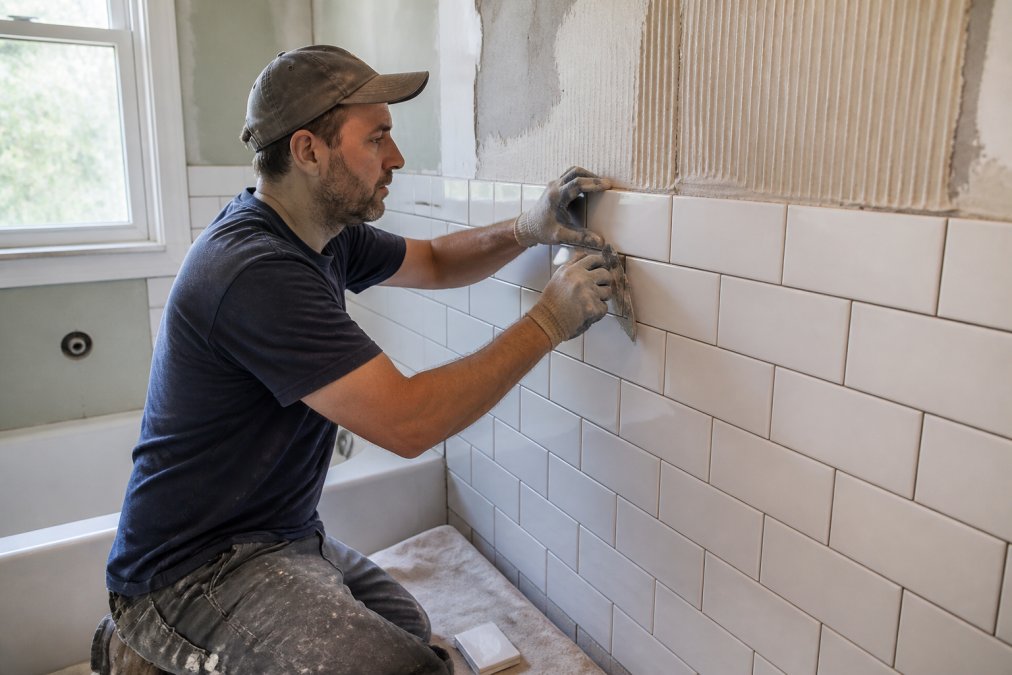
Tile work labor is intensive and represents a major cost driver. Experienced tile setters charge $10-20 per square foot installed, which includes substrate preparation, layout, cutting, grouting, and sealing (bls.gov). A small bathroom with 200 square feet of tile might require 40-60 hours of labor.
Vanity and fixture installation labor varies by complexity. A simple drop-in vanity takes 2-3 hours, while custom built-in work can take 8-12 hours. Faucet installation, mirror mounting, and hardware finishing add another 4-6 hours.
Painting and finishing work typically requires 10-20 hours for proper surface preparation, primer, paint application, and trim work.
Material Expenses for Small Bathroom Updates
Material expenses for a small bathroom update service cost vary widely based on quality choices and fixture selection. Materials typically represent 40-50% of your total budget.
Flooring materials dominate material costs. Ceramic tile ranges from $2-8 per square foot, porcelain tile from $3-15 per square foot, and natural stone from $10-30+ per square foot. For a 50-square-foot bathroom, flooring material costs alone span $100-1,500 depending on selection.
Wall tile for shower surrounds and accent areas follows similar pricing. Budget-grade subway tile costs $3-5 per square foot installed, while premium options exceed $20 per square foot.
Vanities range dramatically by style and material. Stock vanities start at $200-400, semi-custom options run $400-1,000, and custom built-ins exceed $2,000. Countertops add another $200-800 depending on material.
Plumbing fixtures include faucets, supply lines, and drain assemblies. Budget faucets cost $50-150, mid-range options $150-400, and designer faucets $400-1,000+. Rough-in plumbing supplies add $200-500 depending on extent of work.
Lighting fixtures range from $30-50 for basic options to $200-500 for quality sconces and ceiling fixtures. A small bathroom typically needs 3-5 light fixtures, so material costs here span $100-2,500.
Electrical outlets, switches, and GFCI protection devices add $100-300 in material costs. Ventilation fans range from $50-300 depending on capacity and features.
Paint, primer, and finishing supplies typically cost $100-200 for a small bathroom. Doors, hardware, and trim materials complete the picture, adding another $350-900.
The material cost spread for a typical small bathroom update ranges from $2,000-8,000+ depending on finish level.
Small Bathroom Remodel Timeline and Project Scope
Small bathroom remodel timeline directly impacts your small bathroom update service cost and overall project experience. Understanding realistic timelines helps you plan around disruptions and avoid contractor delays that inflate costs.
A simple fixture replacement and cosmetic refresh typically takes 2-3 weeks. This scope involves minimal demolition, no plumbing changes, and straightforward installation.
A moderate bathroom renovation with new tile, updated plumbing fixtures, and electrical upgrades usually requires 4-6 weeks. This scope includes partial demolition, some rough-in work, and finish installation.
A full rip-and-replace bathroom renovation with layout changes, new plumbing rough-in, and electrical rewiring typically takes 6-10 weeks. Permits and inspections add 1-2 weeks to the timeline.
Project scope determines labor hours, material quantities, and complexity. Layout changes are the timeline killer. Moving a toilet requires new drain lines, vent stacks, and potentially structural modifications. Moving a shower requires new plumbing rough-in, waterproofing, and tile work. These changes can add 2-4 weeks and thousands in costs.
Permit requirements vary by jurisdiction. Some areas require permits for plumbing and electrical work; others require them for any renovation over a certain cost threshold. Permit acquisition and inspections typically add 1-3 weeks to your timeline.
Supply chain delays for specialty fixtures or materials can add weeks. Ordering long-lead items early prevents timeline slippage.
Hidden Costs and Permit Requirements
Hidden costs in bathroom renovation are the reason many projects exceed budgets. These unexpected expenses emerge during demolition or inspection and can add 10-30% to your initial estimate.
Water damage behind walls is the most common hidden cost. When demolition exposes rotted drywall, subfloor, or framing, replacement becomes mandatory. A small area of damage might cost $500-1,000 to repair; extensive damage can exceed $3,000-5,000.
Outdated electrical wiring discovered during renovation often requires upgrading. If your bathroom has knob-and-tube wiring or ungrounded outlets, modern code requires replacement. Rewiring a small bathroom can add $1,000-2,500 to your project cost.
Plumbing issues like corroded pipes, improper venting, or undersized supply lines become apparent during rough-in work. Replacing corroded copper or galvanized pipes adds $500-2,000 depending on extent.
Asbestos or lead paint in older homes requires professional abatement before demolition. Testing costs $300-500; abatement can run $1,000-3,000 depending on contamination extent.
Mold growth behind walls or under flooring requires remediation before proceeding. Small mold areas might cost $500-1,500 to address; extensive mold can exceed $3,000-5,000.
Structural issues like soft spots in subfloors or compromised framing discovered during demolition require repair before new work proceeds. Subfloor replacement costs $500-1,500; framing repairs vary widely depending on severity.
Permit costs range from $200-800 depending on project scope and local fees. Building codes may require specific fixtures or materials. ADA-compliant bathrooms need grab bars, accessible vanities, and proper door clearances, adding $500-1,500 to projects.
Contingency planning is essential. Industry best practice suggests budgeting 10-15% contingency for unexpected costs. A $10,000 project should include $1,000-1,500 in contingency to cover discoveries without derailing the budget.

Bathroom Renovation Financing Options for Affordability
Bathroom renovation financing options help spread the cost of your small bathroom update service cost across months or years, making projects more manageable.
Home equity lines of credit (HELOCs) offer flexible borrowing against your home's equity. Interest rates typically range from prime plus 1-3%, making them competitive for larger projects.
Home equity loans provide fixed-rate borrowing against home equity, typically at lower rates than personal loans. Terms range from 5-15 years, and approval usually takes 1-2 weeks.
Personal loans offer faster approval (sometimes same-day) without using home equity as collateral. Interest rates are higher than home equity products, typically 6-36% depending on credit score and lender.
Credit cards with 0% promotional periods (typically 6-18 months) can finance smaller projects if you can pay the balance before interest kicks in.
Contractor financing programs offer project-specific financing with approval timelines of 1-2 weeks. Fluent Contracting partners with financing providers to offer flexible options with competitive rates.
FHA 203(k) loans allow refinancing to include renovation costs for owner-occupied homes. These government-backed loans offer favorable rates but require specific property and borrower qualifications.
Comparing total cost of borrowing is critical. A $10,000 renovation financed at 8% for 5 years costs $1,848 in interest; at 15% it costs $4,289.
Fluent Contracting's flexible financing options include fast approval (often within days), transparent terms without hidden fees, and competitive rates for qualified borrowers.
ROI and Resale Value of Bathroom Updates
Bathroom updates generate meaningful return on investment through both improved daily quality of life and increased home resale value.
A minor bathroom update (new fixtures, paint, lighting) typically recovers 50-70% of costs at resale (remodeling.hw.net). A $5,000 update might add $2,500-3,500 to home value.
A moderate bathroom renovation (new tile, vanity, plumbing updates) recovers 60-75% of costs at resale. A $15,000 update typically adds $9,000-11,250 to home value.
A full bathroom renovation (complete rip-and-replace with premium finishes) recovers 70-85% of costs at resale. A $30,000 update might add $21,000-25,500 to home value.
The resale value impact varies by market, home age, and neighborhood. Newer homes in competitive markets see stronger ROI from bathroom updates than older homes in slower markets.
Beyond resale value, bathroom updates improve daily quality of life immediately. Better lighting, modern fixtures, improved ventilation, and updated aesthetics enhance your experience every day.
Bathroom functionality directly impacts buyer perception. A bathroom with plumbing issues, mold, inadequate ventilation, or outdated fixtures detracts from home appeal and negotiating power.
Sustainable and eco-friendly bathroom updates increasingly appeal to modern buyers. Water-efficient fixtures, LED lighting, and sustainable materials attract environmentally conscious buyers willing to pay premiums.
Conclusion
Understanding small bathroom update service cost requires analyzing multiple factors: labor complexity, material quality, project scope, hidden costs, and financing options. The difference between a $5,000 refresh and a $25,000 full renovation depends entirely on your priorities and budget.
Start with a detailed pre-demolition inspection and clear scope definition. Request itemized estimates that separate labor, materials, and contingency costs. This transparency prevents surprises and helps you make informed decisions about where to invest.
Fluent Contracting brings over 20 years of construction experience to bathroom renovation projects. Our team delivers transparent estimates, efficient scheduling, and quality workmanship that keeps projects on time and within budget. With flexible financing options and fast approval, we help you start your bathroom update today without financial stress.
Frequently Asked Questions
What is the average cost to update a small bathroom?
Small bathroom update costs vary significantly based on scope and finishes. A basic refresh with new fixtures and paint may cost less, while a complete renovation involving plumbing rough-in, tile work, and fixture replacement costs substantially more. The final price depends on your specific needs, material choices, and whether structural issues emerge during demolition. Contact a professional for an accurate estimate tailored to your project.
How much should I budget for labor in a bathroom renovation?
Bathroom renovation labor costs typically represent a significant portion of your total project budget, varying by complexity and contractor expertise. Labor includes demolition, plumbing and electrical work, tile installation, drywall repair, and finishing. Rates depend on local market conditions, project timeline, and whether unexpected structural issues require additional work. Get multiple quotes from licensed contractors to compare labor estimates for your specific scope.
Does a small bathroom remodel increase home value?
Yes, bathroom updates generally improve resale value and appeal to buyers. Mid-range finishes and functional upgrades typically deliver strong ROI. However, the return depends on your market, the quality of work, and how the update compares to surrounding homes. Premium luxury finishes may not return full investment in all markets. A professional contractor can advise on which upgrades offer the best value for your home and area.
What financing options are available for bathroom renovation projects?
Several financing paths exist for bathroom updates: home equity lines of credit, personal loans, contractor financing programs, and cash payment. Each option has different terms, interest rates, and approval timelines. Some contractors offer flexible project financing with faster approval than traditional bank loans. Compare terms carefully before committing. Ask your contractor about their specific financing programs and requirements.