
 listicle
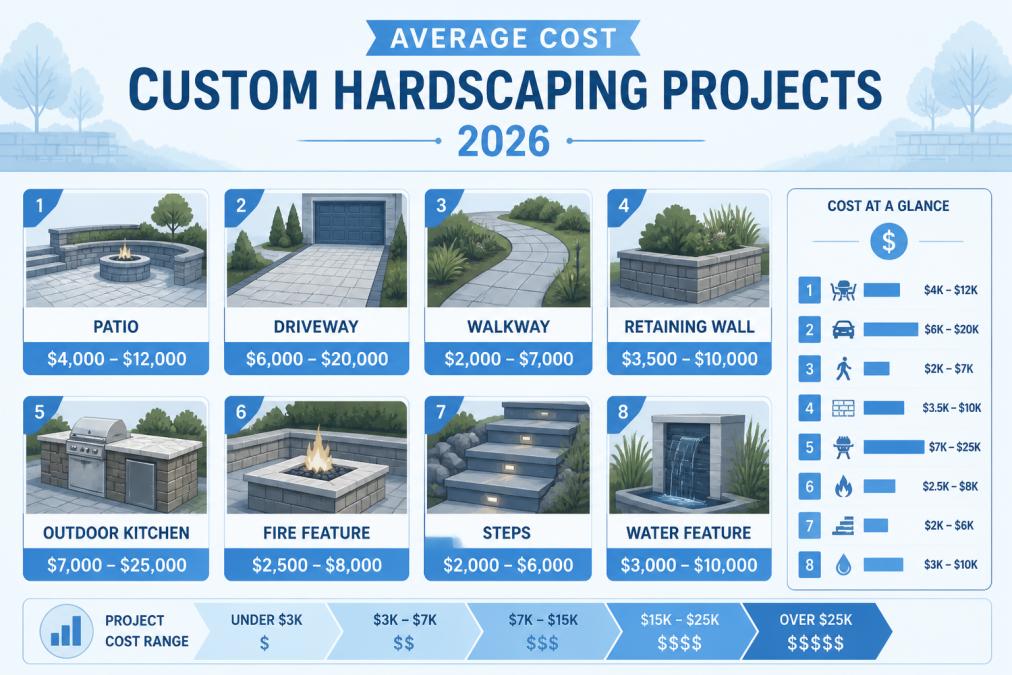
Average Cost for Custom Hardscaping Projects in 2026
Table of Contents
- How Much Does a Custom Hardscaping Project Cost?
- Hardscape Installation Cost per Square Foot: A Detailed Breakdown
- Factors Affecting Hardscape Project Pricing
- Cost Comparison: Paver Patios, Retaining Walls, and Outdoor Kitchens
- Luxury Outdoor Living Space Design Trends and Their Costs
- Hidden Costs: Permits, Maintenance, and ROI
- Budgeting for Your Hardscape Project
- Get a Custom Hardscaping Quote
- Frequently Asked Questions
Last Updated: September 4, 2026
A custom hardscaping project ranges from a few thousand dollars for a simple patio to well into six figures for a complete backyard transformation. This guide from Fluent Contracting breaks down where your budget goes, what drives costs up, and which upgrades deliver real value.
With over 20 years building patios, retaining walls, and outdoor kitchens across Georgia, the single biggest mistake homeowners make is comparing square footage prices without understanding what sits beneath the surface.
How Much Does a Custom Hardscaping Project Cost?
The average cost depends entirely on project scope. A basic paver patio might run $15 to $30 per square foot installed, while a custom installation with seat walls, fire pits, and outdoor kitchens pushes costs considerably higher.
Most contractors price by the square foot, but total project cost is what matters. A 400-square-foot patio with good site access costs far less per square foot than a 200-square-foot patio requiring extensive excavation and drainage.
The best approach is to define the full project scope first, then get a custom hardscaping quote that itemizes materials, labor, and site work.
Hardscape Installation Cost per Square Foot: A Detailed Breakdown
Hardscape installation cost per square foot varies dramatically by material, with concrete pavers in the mid-range and natural stone commanding a significant premium. Labor accounts for roughly half the total in most cases.
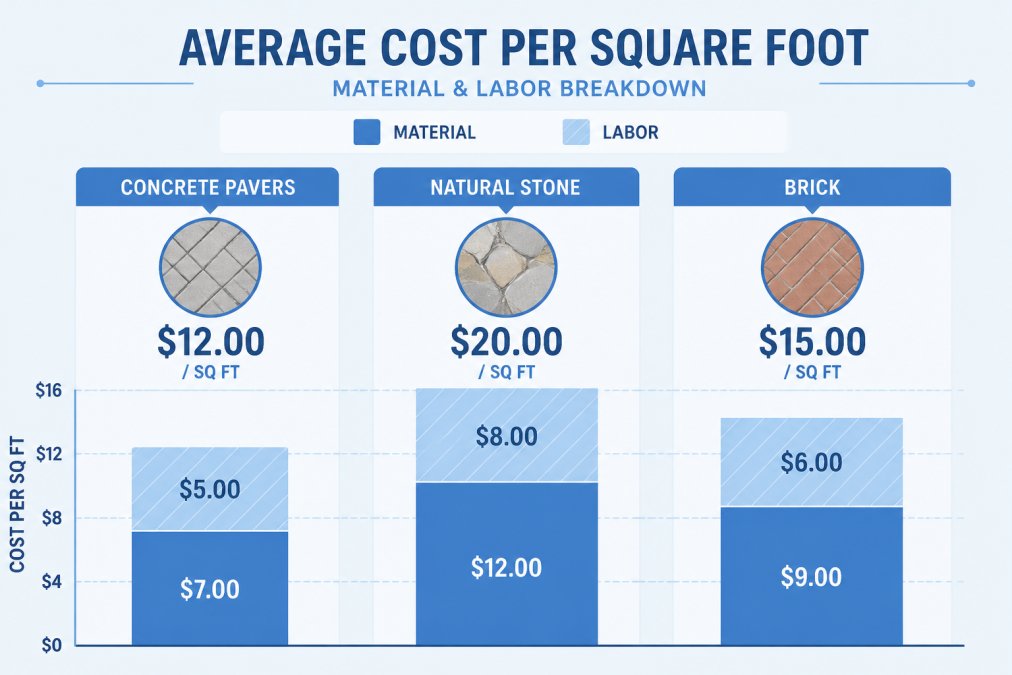
Here is a realistic breakdown of what drives the per-square-foot number:
- Concrete pavers: The most common choice, offering durability and design flexibility at a moderate price point
- Natural stone: Premium option with unique veining and color, costing more for both the material and the skilled labor required
- Brick: Classic look with consistent sizing, typically falling between concrete and stone in cost
- Porcelain pavers: Growing in popularity for their sleek appearance, though they require specialized installation
The per-square-foot price rarely includes everything. Base material, joint sand, edge restraints, and sealing all add to the final number.
Factors Affecting Hardscape Project Pricing
Factors affecting pricing go far beyond material choice. Site access, grading requirements, and project complexity often move the needle more than the pavers themselves.
Material Selection: Concrete Pavers vs. Natural Stone
Material selection is the most visible cost driver, but not always the largest. Concrete pavers offer durability at a moderate price, while natural stone delivers a high-end look many find worth the premium.
Site Complexity and Preparation
Site complexity often surprises homeowners more than any other factor. Trees that need removal, poor drainage, and slopes that demand retaining walls all add meaningful cost before installation begins.
Labor Rates and Project Scope
Labor rates vary by region and by the skill level required. Custom masonry, complex patterns, and features like seat walls or outdoor kitchens demand experienced installers who command higher rates.
Cost Comparison: Paver Patios, Retaining Walls, and Outdoor Kitchens
| Project Type | Relative Cost | Key Cost Drivers | Best For |
|---|---|---|---|
| Paver Patio | Moderate | Square footage, base prep, pattern complexity | Everyday outdoor living and entertaining |
| Retaining Wall | Moderate to High | Wall height, drainage needs, material choice | Sloped yards, creating usable space |
| Outdoor Kitchen | High | Appliances, countertops, utilities, roof structure | Serious entertainers and home value |
Paver patios are the most accessible entry point. Retaining walls add cost but solve real problems on sloped properties. Costs climb most steeply with outdoor kitchens, where appliance packages and utility runs add substantial expense.
The real cost difference comes down to what sits beneath and around each feature. A retaining wall needs proper drainage behind it or hydrostatic pressure will cause failure. An outdoor kitchen requires gas and electric lines, which means permits and inspections.
Luxury Outdoor Living Space Design Trends and Their Costs
Luxury outdoor living space design trends in 2026 lean toward fully integrated spaces that function as true extensions of the home. The cost escalation is rarely about the paver; it is about structural engineering, utility runs, and finish-grade materials.
Outdoor Kitchens: The Biggest Cost Multiplier
Outdoor kitchens are the most requested luxury upgrade, and they are also the most complex to price. A basic built-in grill setup with a modest countertop might add $8,000 to $15,000 to a project. However, a full outdoor kitchen with a built-in refrigerator, sink, storage drawers, a side burner, and a pizza oven can push that figure to $30,000 or more before the hardscape base is even considered.
The cost drivers are not just the appliances. A 6-foot countertop run with a built-in grill needs a reinforced concrete footer, adding excavation and material costs. Gas lines and electrical circuits mean trenching, permits, and inspections.
Fire Features: The Ambiance Premium
Fire features have moved from a novelty to a near-standard expectation in luxury hardscaping. A prefabricated propane fire pit table is a relatively modest addition, often landing in the $2,000 to $5,000 range installed. A custom-built natural gas fire pit with a stone veneer surround and seating wall integration, however, can easily reach $8,000 to $15,000.
The price difference comes down to gas line installation, heat-rated materials, and masonry labor. Natural gas requires a dedicated line from the house, the bowl must be rated for high heat, and surrounding materials must withstand thermal expansion without cracking.
Covered Structures: The Structural Step-Up
A covered patio or pergola is where luxury projects take a significant jump in cost. A freestanding aluminum pergola with a louvered roof that can be installed on a patio might run $10,000 to $20,000. A fully custom wood or steel structure with a solid roof, ceiling fans, lighting, and integrated downspouts can add $40,000 to $75,000 to the project.
The mechanism behind this cost is structural engineering. A solid roof must handle snow loads and wind uplift, requiring engineered beams, properly sized footings, and code-compliant connections. Engineering stamps and permits alone can add several thousand dollars.
The Hidden Cost of Luxury: Site Logistics
What separates a $50,000 luxury project from a $150,000 one is often not the visible features but the logistics of getting materials and equipment to the site. Narrow side access means every paver and slab must be hand-carried, adding 15-25% to the total cost.
If the project requires a crane to lift large stone slabs over the house, equipment rental and crew time add thousands. These costs never appear in a per-square-foot estimate but show up clearly in an itemized quote.
The most successful luxury projects treat the hardscape as an extension of the home's architecture. Matching paver color to the exterior palette, aligning outdoor kitchen counter height with indoor standards, and designing drainage to protect the foundation justify the premium price.
Hidden Costs: Permits, Maintenance, and ROI
Most hardscaping cost guides stop at the installation invoice. That is a mistake. The true cost extends years beyond the final paver installation.
Permitting and Regulatory Costs: The Compliance Layer
Permitting is not a single line item. A basic patio permit in many municipalities runs $50 to $500. Retaining walls over a certain height, often 3 to 4 feet, require an engineered plan and a separate permit, adding $500 to $2,000 for the engineering stamp alone. Outdoor kitchens with gas and electrical lines trigger mechanical and electrical permits.
Homeowners in planned communities face HOA approval processes. Many HOAs charge an application fee of $50 to $200 for a landscape modification request, and they may require detailed drawings, material samples, and a timeline for completion.
The hidden cost here is time. Permit approval can take 2 to 6 weeks, and HOA reviews can add another 30 to 60 days. If your contractor schedules crews before approvals are final, you may pay for idle time or rescheduling fees.
Maintenance Cost Projections: The 10-Year View
The installation cost is one-time, but hardscaping requires ongoing upkeep. Paver patios and walkways should be sealed every 2 to 3 years to protect color and prevent joint sand from washing out. Professional sealing runs $0.50 to $1.50 per square foot, adding $1.50 to $7.50 per square foot over 10 years.
Joint sand replacement is another item rarely budgeted for. Rain and foot traffic wash out polymeric sand between pavers. Replacing it runs $0.75 to $2.00 per square foot and may be needed every 5 to 7 years.
Natural stone needs sealing less frequently than concrete pavers but is more susceptible to staining from food, oil, and leaf tannins. A penetrating sealer every 3 to 5 years costs $0.75 to $2.00 per square foot per application.
Retaining walls have their own maintenance profile. Drainage aggregate behind the wall can settle and weep holes can clog. A professional inspection every few years, at $150 to $400, can catch these issues before wall failure.
ROI and Property Value Impact: What the Data Shows
The counterbalance to these ongoing costs is property value. According to the National Association of Realtors Remodeling Impact Report, a new patio recoups a significant portion of its cost at resale.
Hardscaping extends living space without the cost of a traditional addition. A 400-square-foot paver patio effectively adds an outdoor room, and homes with well-designed outdoor living spaces tend to appraise higher.
ROI is not uniform across all features. A well-built patio and fire pit are broadly appealing and recover a higher percentage of their cost. Highly customized features appeal to a narrower buyer pool and may recover less at resale.
Keep every permit, inspection record, and maintenance receipt. This documentation proves the hardscaping was installed to code and properly maintained, a differentiator in a competitive market.
Budgeting for Your Hardscape Project
Budgeting starts with separating needs from wants, then building in a contingency for site surprises. A realistic budget accounts for materials, labor, site excavation, and drainage solutions.
A practical budgeting framework looks like this:
- Define the full project scope, including all features you want now rather than later
- Get itemized quotes from professional contractors that break out materials, labor, and site work
- Add a contingency of 10-15% for site conditions discovered during excavation
- Factor in permitting costs and ongoing maintenance for the first few years
- Consider financing options if paying cash means delaying the project
Bundling multiple features into one project is more cost-effective than adding them later. Building a patio and outdoor kitchen together saves on mobilization and site work, and ensures the design works as a cohesive whole.
Get a Custom Hardscaping Quote
The average cost is ultimately a range, not a fixed number. The only way to know your actual price is through a detailed site evaluation and itemized quote.
Look for contractors who ask questions about your site before giving you a number. A professional will want to assess grading, drainage, and site access before committing to pricing.
Fluent Contracting brings over 20 years of construction experience to every hardscape project, managing everything from initial design through final installation. Our team handles both the indoor construction and the outdoor hardscaping, so you are not coordinating multiple companies and hoping the work aligns. With flexible financing available and fast approval, you can start your project on schedule without waiting months to save up the full amount.
Frequently Asked Questions
How much would a 20x20 paver patio cost?
A 20x20 paver patio is 400 square feet. The total cost depends heavily on the paver type, base preparation, and site access. Concrete pavers are generally the most budget-friendly option, while natural stone costs more. For an accurate estimate, you need a professional to assess your yard's grading and drainage. Contact us for a detailed quote.
What are the primary factors that increase hardscaping project costs?
Several factors affect hardscape project pricing. Key ones include material selection (natural stone costs more than concrete), site complexity (steep slopes or poor drainage require extra work), the need for site excavation and sub-base preparation, and the project's overall scope. Labor rates and the cost of drainage solutions also contribute to the final price.
Is hardscaping more expensive than landscaping?
Yes, hardscaping is generally more expensive than softscaping (planting, sod, and garden beds). Hardscape installation requires heavy materials, site excavation, sub-base preparation, and skilled labor for tasks like grading and laying pavers. While the upfront custom hardscaping cost is higher, hardscape features like patios and retaining walls offer a strong return on investment.
What is the least expensive hardscape material?
Concrete pavers are typically the most cost-effective hardscape material. They are durable, come in many styles, and cost less than natural stone or custom masonry. The total hardscape installation cost per square foot for a paver patio is often lower than other options because the materials are more affordable and installation is more straightforward.
Should I budget for site preparation and drainage in my hardscape estimate?
Absolutely. Site preparation and drainage are essential parts of any hardscape installation. Proper grading and a well-prepared sub-base prevent future settling and water damage. Cutting corners here can lead to costly repairs. A professional will always include these steps in the estimate to ensure a long-lasting outdoor living space.
Planning a custom hardscape project means balancing your vision against a realistic budget, and the details matter more than the averages. Fluent Contracting combines premium materials, thoughtful design, and meticulous execution to deliver outdoor living spaces that last, with transparent terms and financing options that keep projects on schedule. Get started with Fluent Contracting and turn your backyard into the outdoor retreat you have been envisioning.
This article was written using GrandRanker
Frequently Asked Questions
How much would a 20x20 paver patio cost?
A 20x20 paver patio is 400 square feet. The total cost depends heavily on the paver type, base preparation, and site access. Concrete pavers are generally the most budget-friendly option, while natural stone costs more. For an accurate estimate, you need a professional to assess your yard's grading and drainage. Contact us for a detailed quote.
What are the primary factors that increase hardscaping project costs?
Several factors affect hardscape project pricing. Key ones include material selection (natural stone costs more than concrete), site complexity (steep slopes or poor drainage require extra work), the need for site excavation and sub-base preparation, and the project's overall scope. Labor rates and the cost of drainage solutions also contribute to the final price.
Is hardscaping more expensive than landscaping?
Yes, hardscaping is generally more expensive than softscaping (planting, sod, and garden beds). Hardscape installation requires heavy materials, site excavation, sub-base preparation, and skilled labor for tasks like grading and laying pavers. While the upfront custom hardscaping cost is higher, hardscape features like patios and retaining walls offer a strong return on investment.
What is the least expensive hardscape material?
Concrete pavers are typically the most cost-effective hardscape material. They are durable, come in many styles, and cost less than natural stone or custom masonry. The total hardscape installation cost per square foot for a paver patio is often lower than other options because the materials are more affordable and installation is more straightforward.
Should I budget for site preparation and drainage in my hardscape estimate?
Absolutely. Site preparation and drainage are essential parts of any hardscape installation. Proper grading and a well-prepared sub-base prevent future settling and water damage. Cutting corners here can lead to costly repairs. A professional will always include these steps in the estimate to ensure a long-lasting outdoor living space.