
 comparison
Hardscaping vs Landscaping for Property Value: 2026 Guide
Table of Contents
- Hardscaping vs Landscaping: Which Boosts Property Value More?
- ROI of Outdoor Living Spaces vs Traditional Landscaping
- Landscaping Maintenance Costs vs Hardscaping: The Long-Term Math
- Curb Appeal Showdown: Structural Hardscape Features vs Living Plants
- Modern Outdoor Living Space Design Trends That Drive Appraisals
- The Hardscaping vs Landscaping Decision Framework for Your Home
- Common Value-Draining Mistakes to Avoid
- Conclusion
- Frequently Asked Questions
Last Updated: September 9, 2026
Hardscaping vs Landscaping: Which Boosts Property Value More?
Hardscaping vs landscaping is one of the most consequential decisions a homeowner can make when planning outdoor improvements, and the answer depends far more on your property's specific conditions than on generic industry advice. At Fluent Contracting, we've spent over 20 years building structural hardscapes across Georgia, and the honest answer is that the highest-value approach nearly always combines both strategically rather than choosing one exclusively. The distinction matters because these two categories serve fundamentally different purposes: hardscaping refers to the non-living, structural elements like patios, retaining walls, walkways, and outdoor kitchens, while landscaping encompasses the living features such as turf, garden beds, shrubs, and mature trees.
The real question isn't which category is "better," but rather which investment delivers the strongest return for your specific property, climate, and goals. Below, we'll break down the return on investment for each, the long-term cost math, and a practical framework for deciding where your renovation budget belongs.
ROI of Outdoor Living Spaces vs Traditional Landscaping
Real estate professionals generally agree that outdoor living spaces deliver some of the strongest returns of any home improvement, often rivaling kitchen and bathroom renovations. The key driver is functional square footage: a well-designed patio or deck extends the usable area of your home without the cost of a structural addition, which appraisers increasingly recognize when calculating market value.
However, the return on investment is not uniform across all projects. The National Association of Realtors Remodeling Impact Report consistently shows that certain hardscape projects deliver a higher percentage of cost recovery than others. For instance, a standard wood deck addition is a perennial top performer, often recovering a significant majority of its project cost upon resale. Similarly, a patio or paver walkway typically recovers a substantial portion of its installation cost, making them reliable value-adds.
The mechanism behind this recovery is straightforward: these projects create a new, defined 'outdoor room' that appraisers can quantify as additional living space. A simple grass lawn, by contrast, is rarely considered an improvement, it is an expected baseline. The value in landscaping comes from the perceived maturity and care it signals, which can shorten time on market and support a stronger asking price, but its measurable impact on a formal appraisal is often more modest than a permanent hardscape structure.
Traditional landscaping, by contrast, contributes primarily through curb appeal and aesthetic enhancement rather than functional utility. The ROI here is more indirect. A well-landscaped yard can increase the perceived value of the home by framing the architecture and creating an emotional connection for the buyer. This is where the 'curb appeal' premium comes into play, often helping a home sell faster and for closer to its asking price, even if the appraised value doesn't see a dollar-for-dollar increase.
That said, the highest appraisals typically reflect a balance. A home with a beautiful paver patio surrounded by bare dirt will appraise lower than one with a simpler patio framed by well-designed garden beds. The most effective strategy is to view hardscaping as the 'asset' that adds functional square footage and landscaping as the 'polish' that maximizes its perceived value. A project that combines a new patio (asset) with refreshed mulch and foundation plantings (polish) will almost always outperform a project that focuses on only one.
Landscaping Maintenance Costs vs Hardscaping: The Long-Term Math
This is where many homeowners make their most expensive mistake: they calculate only the installation cost and ignore the maintenance-to-value ratio over the life of the investment.
Living landscape features require ongoing expense that never ends. Turf needs mowing, fertilization, and irrigation. Shrubs need pruning. Garden beds need mulching and replanting. Over a ten-year period, these recurring costs can approach or even exceed the original installation price, quietly eroding the net return on your investment.
Hardscape materials, by contrast, carry minimal ongoing expense. A quality paver patio or retaining wall may need occasional cleaning, weed control between joints, and re-sanding every few years, but the annual cost is a fraction of landscape maintenance. For owners who plan to stay in their home for many years, this maintenance-to-value ratio often tips the decision toward hardscaping.
The caveat is that hardscaping without any softscaping can look stark and uninviting. The most cost-effective approach is to invest primarily in hardscape structure, then use a modest, manageable landscape plan to soften the edges.
Curb Appeal Showdown: Structural Hardscape Features vs Living Plants
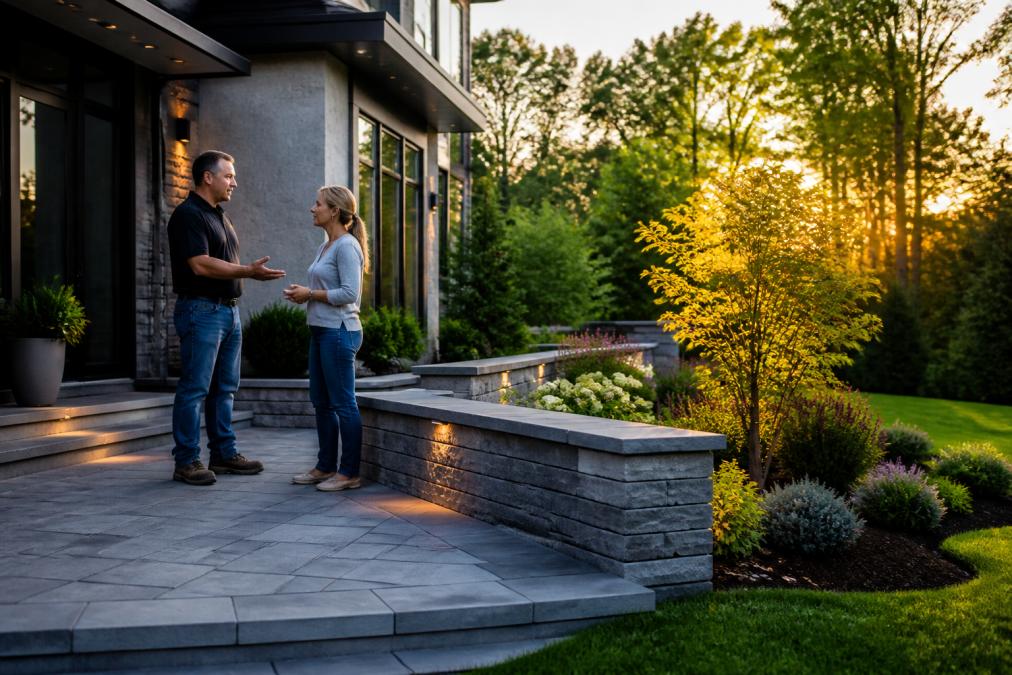
Curb appeal is the first impression that determines whether a potential buyer even steps through the front door, and both hardscape and landscape elements play distinct roles in that critical first moment.
Structural features like walkways, entry steps, and retaining walls provide permanence and visual order. A well-executed paver walkway with clean edges signals that the property has been maintained to a high standard, and it frames the home in a way that living plants alone cannot achieve. These elements photograph well and read clearly in listing photos, which matters in a market where most buyers begin their search online.
Living plants deliver emotional impact through color, texture, and scale. Mature trees and layered shrub beds make a home feel established and private, and they soften the hard lines of architecture. Real estate agents frequently note that buyers form their opinion of a property within seconds of arriving, and a home with vibrant, healthy landscaping feels more welcoming than one with only hard surfaces.
The properties that command the strongest offers typically combine both: a defined hardscape entry that creates structure, framed by layered plantings that add warmth and seasonal interest.
Modern Outdoor Living Space Design Trends That Drive Appraisals
Modern outdoor living space design trends have shifted decisively toward full-function outdoor rooms, and appraisers have adjusted their methodology accordingly. The days of a simple concrete slab and a grill are giving way to complete outdoor kitchens, covered porches, fire pits, and integrated lighting that make the space usable well beyond summer months.
Several trends are currently driving the highest appraisals in the market. Outdoor kitchens with built-in grills, refrigeration, and counter space effectively add a second cooking and entertaining zone to the home. Covered patios and porches extend usability across seasons and weather conditions, which appraisers factor into their functional utility calculations. Fire pits and outdoor fireplaces create a gathering focal point that extends evening and cooler-month use.
Permeable pavers are another trend gaining traction with both appraisers and environmentally conscious buyers. These materials manage stormwater on site, reducing runoff and drainage issues, and they qualify as sustainable landscaping improvements that some municipalities view favorably.
The common thread across these trends is that they convert outdoor space from decorative to functional, which is precisely what drives property appreciation.
The Hardscaping vs Landscaping Decision Framework for Your Home
When deciding where to invest, work through this framework rather than relying on guesswork or what a neighbor recently installed.
First, assess your property's current condition. If you have no defined outdoor living space at all, hardscaping typically delivers the stronger return because it adds functional square footage that did not previously exist. If your home already has a patio or deck but the landscape is bare or neglected, investing in landscaping will likely move the needle further.
Second, consider your regional climate. In markets with long, hot summers, covered outdoor living spaces and shade structures extend usability dramatically. In cooler climates, fire pits and outdoor heaters become the value drivers. The USDA Plant Hardiness Zone Map is a useful reference for understanding what plant material will thrive in your area, which directly affects both landscape success and maintenance burden.
Third, be honest about your maintenance capacity. A landscape that requires more care than you can provide will decline in appearance and drag down curb appeal rather than support it. If you travel frequently or simply do not enjoy yard work, prioritize hardscape and choose low-maintenance plantings.
Fourth, evaluate your timeline. If you plan to sell within three to five years, focus on projects with the fastest payback: defined entry walks, refreshed mulch and plantings, and a functional patio. If you plan to stay longer, you can invest in higher-end features like outdoor kitchens that you will enjoy while they continue to build equity.
| Decision Factor | Choose Hardscaping | Choose Landscaping |
|---|---|---|
| Current outdoor space | No patio or defined living area | Existing patio but bare surroundings |
| Climate | Hot, wet, or long seasons needing durable surfaces | Mild climate supporting year-round plant growth |
| Maintenance capacity | Low; want minimal upkeep | High; enjoy regular yard care |
| Timeline | Staying 5+ years; want daily use | Selling within 3 years; need quick curb appeal |
Common Value-Draining Mistakes to Avoid
The most expensive mistake homeowners make is over-improving relative to the neighborhood. This is the 'neighborhood ceiling' problem. If the median home value in your area is $350,000, and you invest $150,000 in a resort-style backyard with an outdoor kitchen, a pool, and full hardscape, you will likely not recover that investment at resale. Appraisers and buyers use comparable sales (comps) in your immediate area to set a value. If no other home in a half-mile radius has a comparable outdoor living space, it won't be factored into the appraisal. Instead of adding $150,000 in value, you may only add $50,000, effectively losing $100,000 on the day you sell. The rule of thumb is to match your project scope to the top 10-20% of homes in your immediate neighborhood, not to build the most expensive home on the block.
A second common error is poor material selection disguised as cost savings. Low-cost pavers, thin veneers, and substandard installation may look acceptable initially but deteriorate quickly, requiring replacement that costs more than doing it right the first time. Structural hardscape failures, such as settling patios or failing retaining walls, are not only expensive to repair but can also raise concerns during a property inspection. A buyer's inspector will flag a cracked, uneven patio or a bowing retaining wall as a structural defect, which can kill a deal or force a significant price reduction.
Neglecting drainage is another frequent misstep. Hardscape that directs water toward the foundation, or landscape grading that creates standing water, can cause damage that far exceeds any value the improvement added. Proper site preparation and drainage planning should be non-negotiable components of any outdoor project. This is a critical point where the 'maintenance-to-value ratio' comes into play. A buyer is not just looking at the beauty of the space; they are looking at the future liability. A yard with extensive, high-maintenance gardens that require daily watering and weekly pruning may be seen as a burden, not a benefit. Conversely, a well-designed hardscape with a small, manageable planting bed signals low future maintenance, which is a strong selling point.
Finally, avoid the temptation to skip professional design. A cohesive plan that considers scale, sight lines, material transitions, and plant maturity will always outperform a piecemeal approach, regardless of how much you spend on individual elements. A professional designer can also help you navigate the 'neighborhood ceiling' by recommending the right scope of work for your specific market, ensuring you invest where the return is highest and avoid over-improving your property.
Conclusion
Choosing between hardscaping and landscaping for property value is not an either-or decision; it is a strategic allocation of resources based on your property's current state, your climate, and your timeline. Hardscaping delivers functional square footage and durable, low-maintenance value, while landscaping provides the curb appeal and emotional pull that moves buyers. The strongest returns come from a balanced approach that leads with quality hardscape structure and supports it with appropriate, manageable plantings.
Frequently Asked Questions
Does hardscaping add more value to a home than landscaping?
Hardscaping and landscaping both add value, but they serve different purposes. Hardscape features like patios, retaining walls, and walkways extend your usable living space, which appraisers often value higher because buyers see immediate functional utility. Landscaping with mature plants and garden beds primarily boosts curb appeal and can help a home sell faster. For the strongest return on investment, a balanced approach that combines both typically performs best.
What outdoor features provide the highest return on investment?
Outdoor living spaces consistently rank among the top ROI improvements. Patios, outdoor kitchens, and fire pits extend your home's functional square footage without the cost of a traditional addition. These hardscape elements appeal to buyers seeking entertainment space. Permeable pavers and retaining walls also offer strong returns because they solve drainage problems while adding structure. Simple upgrades like new walkways and outdoor lighting deliver solid returns at a lower entry cost.
How do landscaping maintenance costs compare to hardscaping over time?
Landscaping requires ongoing investment: seasonal planting, pruning, lawn care, irrigation, and replacement of short-lived plants. These costs add up every year. Hardscaping, once installed, needs only occasional cleaning, sealing, and minor repairs. A paver patio or retaining wall can last decades with minimal upkeep. When evaluating long-term value, factor in the maintenance-to-value ratio: hardscaping typically costs more upfront but far less to maintain than living landscape features.
At Fluent Contracting, we handle both the construction and the hardscaping, which means one team manages your project from foundation to finish without coordination headaches. With over 20 years of experience and flexible financing options that can get you approved and started quickly, we can help you determine the right mix of hardscape and landscape for your specific property and goals. Get started with Fluent Contracting and build outdoor space that genuinely adds to your home's value.