
 how-to
How to Ensure Contractor Sticks to Timeline
Table of Contents
- Start With a Contract That Has Teeth
- Set a Realistic Project Timeline Before Work Begins
- Track Milestones to Spot Problems Early
- Recognize the Signs of a Contractor Falling Behind
- Communicate Daily and Document Everything
- Know What to Do When a Contractor Misses Deadlines
- Protect Yourself From Scope Creep and Change Orders
- Conclusion
- Frequently Asked Questions
Last Updated: September 5, 2026
The single most effective way to ensure a contractor sticks to your timeline is to build accountability into the contract before any work begins, then track progress against a written schedule from day one. Knowing how to ensure contractor sticks to timeline demands more than trust; it requires a documented process with clear consequences. This guide from Fluent Contracting, a construction firm with over 20 years of experience, outlines the practical steps homeowners can take to protect their investment and keep renovation projects moving. Below, we’ll show you exactly how to structure your agreement and manage the project so a reasonable schedule does not spiral into months of delays.
Start With a Contract That Has Teeth
A vague agreement is the root cause of most timeline failures. Your construction contract must define the start date, the completion date, and the consequences for missing them to hold a contractor accountable. Without these specifics, you have little recourse if the project stalls.
A construction contract schedule clause is your primary legal tool. Include a start date and a "substantial completion" date, not just a hopeful estimate. The contract should also state that "time is of the essence," a legal phrase meaning the schedule is a core part of the agreement, not a secondary detail. This phrasing strengthens your position if you need to pursue legal recourse for a breach.
Beyond that single phrase, you need to understand the mechanics of a breach. In most states, a contractor who abandons a project or fails to pursue the work with diligence can be held liable for "breach of contract." Your remedy is typically "damages," which means the money it costs you to hire a replacement to finish the work, plus any extra living expenses you incur because of the delay. To make that claim stick, your contract needs a few specific provisions:
- A clear scope of work. Attach the architectural drawings and specifications as an exhibit. If the contractor claims a task was "extra work," you can point to the drawings to show it was always included.
- A notice of default clause. This outlines the steps you must take before terminating the contract. It usually requires you to send a written notice describing the breach and giving the contractor a set number of days (often 5 to 10) to cure it. Following this procedure precisely is critical; if you terminate without following the clause, you could be the one in breach.
- A damages or liquidated damages clause. Some contracts include a per-day amount the contractor must pay for each day the project runs past the completion date. This is not a penalty; it is a pre-estimate of your costs, like temporary housing or storage. If the contract is silent on this, you can still sue for actual damages, but you will have to prove them with receipts and invoices.
Your contract should also clearly outline the payment schedule, tying each payment to the completion of specific work phases rather than calendar dates. This structure protects you by ensuring the contractor has financial motivation to reach each milestone before receiving the next draw. Also, specify the process for requesting changes in writing, as this is your defense against scope creep.
Finally, verify the contractor's license and insurance before you sign. A licensed contractor is subject to state oversight and disciplinary action, which gives you an additional layer of recourse through the state licensing board if things go wrong. An unlicensed contractor leaves you with far fewer options, as many state boards will not assist with disputes involving unlicensed work.
Set a Realistic Project Timeline Before Work Begins
An unrealistic schedule sets everyone up for failure. Before signing, work with your contractor to build a detailed project timeline that accounts for material lead times, permit approvals, and subcontractor availability.
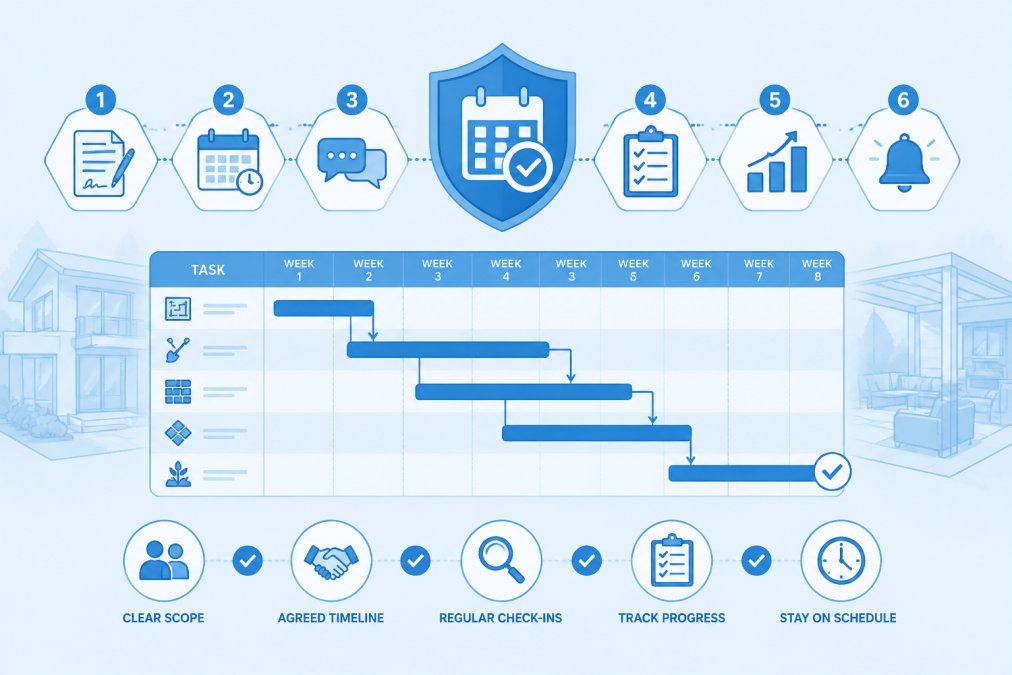
The planning phase should produce a construction schedule that breaks the job into phases, such as demolition, rough-in, inspections, and finishes. For a typical renovation, you should ask for a week-by-week breakdown. This document becomes your roadmap for tracking progress and identifying schedule variance early.
A common mistake is ignoring material procurement. Many delays happen because items like custom cabinets or windows have lead times of several weeks. Ensure the schedule includes dates for ordering materials so they arrive before the crew needs them. Discuss contingency planning for potential supply chain issues, and build a buffer into the schedule for unexpected discoveries, like outdated wiring behind walls.
Track Milestones to Spot Problems Early
Tracking milestones is the most reliable way to spot a slipping schedule before it becomes a crisis. A project that is on track in week two is far more likely to finish on time than one that is already showing signs of delay. But "tracking" is not just looking at the site and hoping. It requires a system.
You should receive a schedule that lists major milestones, such as rough electrical passed, drywall hung, and cabinets installed. Review progress against this list weekly. Use a simple tracking table to compare planned dates against actual dates, and ask for a daily progress report from the site supervisor if you cannot be there in person.
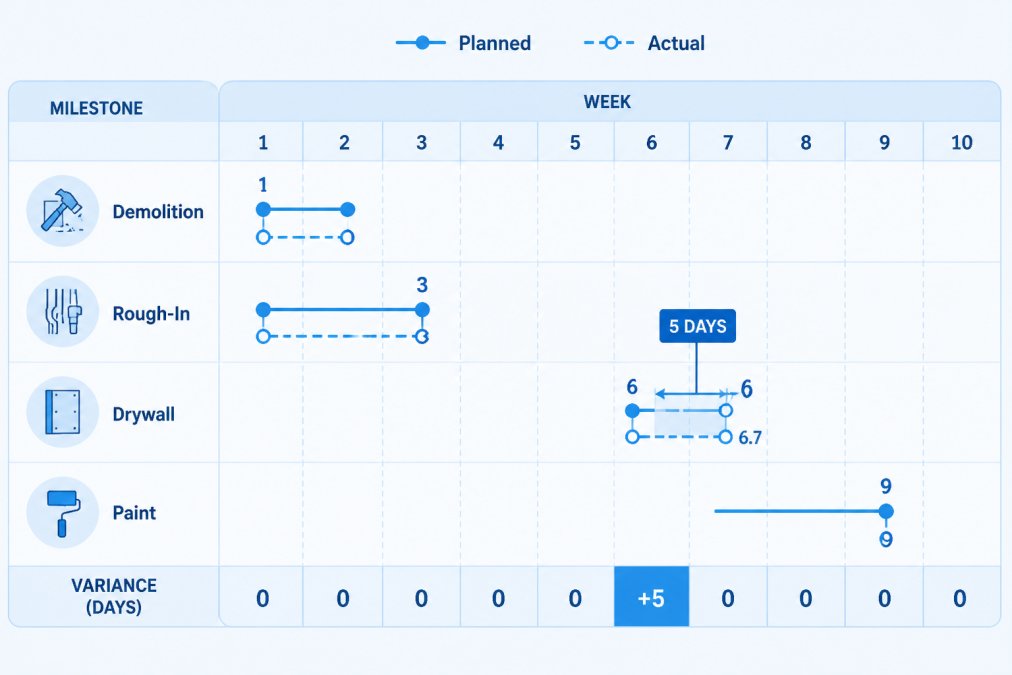
To make this practical, create a simple weekly tracking sheet with columns for each milestone: Planned Start, Planned Finish, Actual Start, Actual Finish, and Variance. A variance of more than three days on any critical path item is your trigger to ask questions. The critical path is the sequence of tasks that directly determines the project end date, for example, you cannot hang drywall until the electrical rough-in is inspected and approved. A delay on the critical path pushes everything else out.
A more structured approach is to use a simple Gantt chart. You can build one in a spreadsheet or use a free online tool. List the major tasks down the left column, and draw horizontal bars across a calendar grid to show when each task should start and finish. Each week, shade in the actual progress. This visual comparison makes it immediately obvious where the schedule is slipping.
For a daily record, use a simple daily report template that captures the essentials:
- Date and weather conditions
- Number of workers on site and their trades
- Work completed today
- Materials delivered
- Issues or delays encountered
- Planned work for tomorrow
Ask the site supervisor to fill this out at the end of each day and email it to you. If they resist, explain that this is a standard project management practice that protects both of you by creating a clear record. A professional contractor will have no problem with this; it is a red flag if they do.
If you notice a task is taking longer than planned, address it immediately. A one-week delay in the first month often grows into a month-long delay by the end if it is not corrected. Consistent site visits and documented progress keep the contractor accountable and demonstrate that you are paying attention to the project timeline.
Recognize the Signs of a Contractor Falling Behind
Catching the signs of a contractor falling behind early gives you time to intervene. The most obvious indicator is an empty job site, but subtler cues include a lack of materials on site, frequent subcontractor changes, and vague answers about the schedule.
A contractor who is falling behind will often shift blame to others, citing supplier issues or weather, even when conditions are normal. They may also start asking for payment ahead of the agreed schedule to cover cash flow problems. Treat any request to alter the payment schedule as a serious warning sign.
Another key indicator is a lack of written communication. A reliable contractor provides regular updates, even when there is no progress to report. Silence, or having to chase them for information, signals disorganization or avoidance. Trust your instincts: if the project manager cannot clearly state what will happen next week and who will be on site, the project is not being managed effectively.
Communicate Daily and Document Everything
Effective communication is the backbone of project transparency. Establish a routine where the contractor provides a brief written update at the end of each day or week, summarizing what was completed and what is scheduled next. This keeps you informed and creates a written record of progress.
All communication should be in writing, whether through email, a project management app, or a simple shared document. This is not about distrust; it is about maintaining a clear history. If a dispute arises over a change or a delay, the written record is your most valuable asset for contract enforcement.
You should also document the condition of the work itself. Take dated photos of the site at each milestone. This practice helps with quality control and provides evidence if you need to dispute the quality of completed work or the accuracy of a progress report. This level of involvement signals to the contractor that you are an engaged client who will notice shortcuts.
Know What to Do When a Contractor Misses Deadlines
When a contractor misses a deadline, your response should be immediate, measured, and documented. Do not wait weeks to raise the issue, as this can be interpreted as acceptance of the new, slower pace.
Your first step is to call a formal meeting to discuss the schedule variance. Ask for a written recovery plan that explains the cause of the delay and outlines how they intend to get the project back on track. This plan should include new dates for upcoming milestones and identify specific resources, like additional crew members, that will be allocated to the project.
If the contractor cannot provide a credible recovery plan or misses the revised milestones, you may need to consider legal recourse. Review your contract to understand your rights regarding termination and any damages clauses. In many cases, the threat of formal action, such as a written notice of default, is enough to prompt a change in behavior. Your goal is to get the project finished, not to start a lawsuit, but you must be prepared to enforce your contractual rights to maintain accountability.
Protect Yourself From Scope Creep and Change Orders
Scope creep is the silent killer of construction schedules. It occurs when small, unplanned additions, like moving a light switch or upgrading a tile, are verbally approved without adjusting the timeline or budget.
Every change, no matter how small, must go through a formal change order process. A change order is a written document that describes the new work, states the additional cost, and, critically, adjusts the completion date. If a change does not extend the timeline, the document should state that explicitly. This process protects you from disputes and ensures the contractor is compensated for extra work while keeping the overall schedule intact.
To minimize changes, finalize your selections for fixtures, finishes, and materials before the work begins. Indecision during the project is a primary driver of delays. When you do request a change, remember that it will likely push out the completion date, so prioritize your requests and understand the trade-off between the new feature and your project delivery date. This discipline is essential for how to ensure contractor sticks to timeline.
Conclusion
Keeping a renovation on schedule requires a proactive approach grounded in a detailed contract, a realistic timeline, and consistent oversight. By tracking milestones, documenting communication, and managing changes formally, you protect your investment and significantly increase the likelihood of a timely, quality completion. Fluent Contracting brings over 20 years of construction experience to every project, managing every detail with precision and providing transparent terms for project funding to keep your build moving. Get started with Fluent Contracting and experience a renovation process that respects your time and delivers thorough, complete results.
Frequently Asked Questions
How do I keep a contractor on schedule?
Start with a contract that includes a time-is-of-the-essence clause, a detailed construction schedule, and a payment schedule tied to completed milestones. Then track progress against that schedule weekly, require daily progress reports, and address any schedule variance immediately. Contractors prioritize clients who hold them accountable through documented expectations and regular site visits.
Can I withhold payment if a contractor misses deadlines?
You can, but only under the terms spelled out in your contract. Many states allow retainage, holding back a percentage until substantial completion. However, withholding payment without a contractual basis can put you in breach. Your contract should specify the payment schedule, when each draw is earned, and what remedies apply if the contractor falls behind.
What are the common causes of construction delays?
The most frequent causes include material procurement issues, subcontractor scheduling conflicts, and unclear project documentation. Change orders are another major factor, which is why a detailed scope of work matters. Supply chain volatility has made lead times a bigger risk, so your contract should require the contractor to order long-lead items early and provide a contingency plan.
How do I know if my contractor is actually falling behind?
Compare the contractor's weekly progress against the project timeline in your contract. Look for missed milestones, a crew working fewer days than scheduled, or subcontractors not showing up. Inconsistent communication, excuses about materials, and a growing punch list are also warning signs. A formal schedule variance analysis each week will show you the real status.
This article was written using GrandRanker
Frequently Asked Questions
How do I keep a contractor on schedule?
Start with a contract that includes a time-is-of-the-essence clause, a detailed construction schedule, and a payment schedule tied to completed milestones. Then track progress against that schedule weekly, require daily progress reports, and address any schedule variance immediately. Contractors prioritize clients who hold them accountable through documented expectations and regular site visits.
Can I withhold payment if a contractor misses deadlines?
You can, but only under the terms spelled out in your contract. Many states allow retainage, holding back a percentage until substantial completion. However, withholding payment without a contractual basis can put you in breach. Your contract should specify the payment schedule, when each draw is earned, and what remedies apply if the contractor falls behind.
What are the common causes of construction delays?
The most frequent causes include material procurement issues, subcontractor scheduling conflicts, and unclear project documentation. Change orders are another major factor, which is why a detailed scope of work matters. Supply chain volatility has made lead times a bigger risk, so your contract should require the contractor to order long-lead items early and provide a contingency plan.
How do I know if my contractor is actually falling behind?
Compare the contractor's weekly progress against the project timeline in your contract. Look for missed milestones, a crew working fewer days than scheduled, or subcontractors not showing up. Inconsistent communication, excuses about materials, and a growing punch list are also warning signs. A formal schedule variance analysis each week will show you the real status.